Full sleeves
Automatic sleeve labelling
Applies shrink sleeves to bottles and containers before heat shrinking.
View related machinerySleeve labels
Heat shrink label machines apply and shrink sleeve labels, neck bands and tamper-evident sleeves around bottles and containers.
UK specification advice
Shrink label projects usually involve sleeve application followed by controlled heat shrinking. The sleeve material, container shape and label height determine the process.
Full body sleeves, neck bands and cap seals all need different machine setups. The heat tunnel must shrink the sleeve evenly without distorting print or container shape.
Lancing can help compare sleeve applicators, neck band machines and bottle capsule heat shrinking routes.
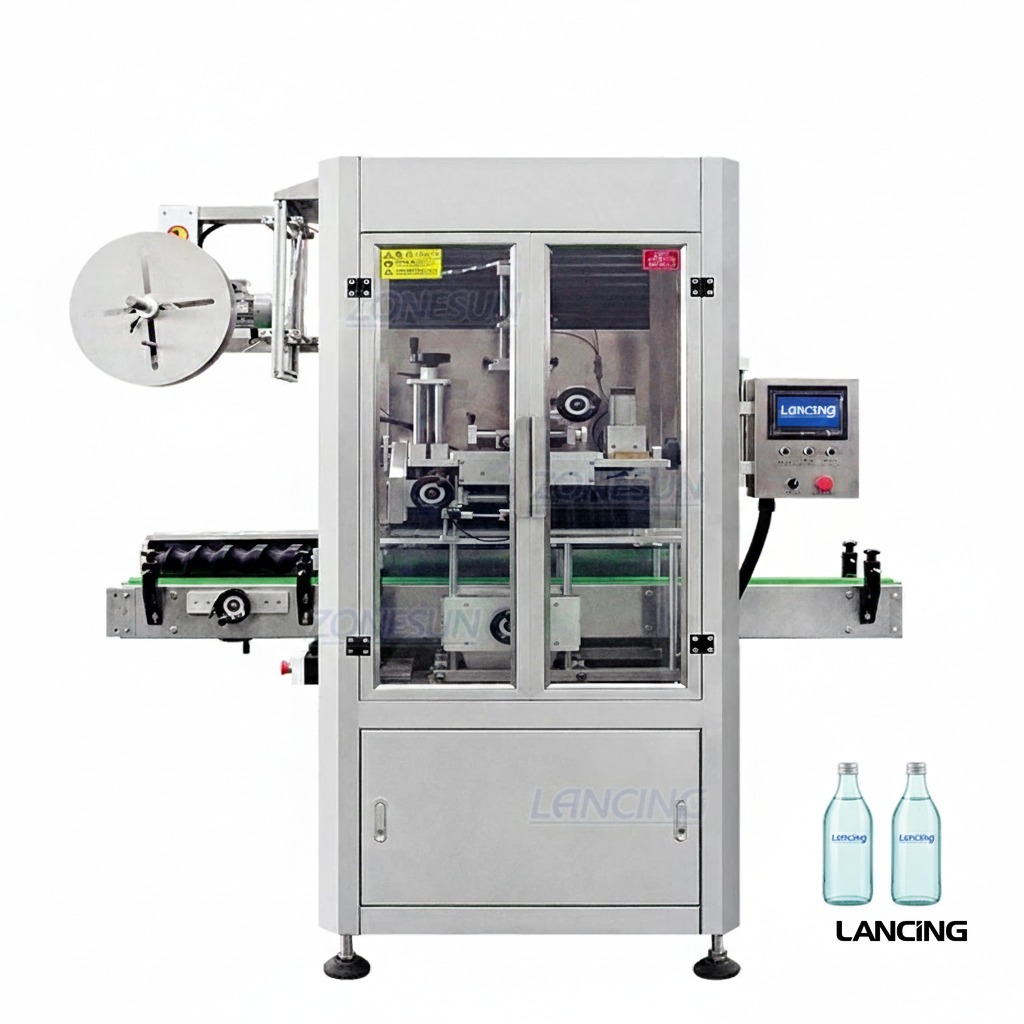
Machinery route
The right system depends on sleeve height, container shape and required output.
Full sleeves
Applies shrink sleeves to bottles and containers before heat shrinking.
View related machineryNeck bands
For tamper-evident bands and bottleneck sleeve applications.
View related machineryCapsules
Bottle cap and capsule heat shrinking routes for selected packaging formats.
View related machineryBuying notes
Sleeve labels need accurate sleeve placement before heat shrinking. Container stability, feed speed and sleeve cutting accuracy all affect the result.
Heat tunnels for labels may use different heat delivery from general shrink wrap tunnels. The aim is to recover the sleeve evenly around complex bottle shapes.
When requesting a quote, include photos, container drawings, sleeve material, label height and target containers per minute.
Common questions
It is machinery used to apply and shrink sleeve labels, neck bands or tamper-evident sleeves around containers.
Some systems may be configured for different sleeve types, but application method and sleeve dimensions must be checked.
Send container dimensions, sleeve height, sleeve material, required output and photos or samples.
Not always. Sleeve labels often need more precise heat control around container shapes and printed sleeves.
Next step
Send product dimensions, pack format, approximate output rate and film preference. Lancing can help compare chamber sealers, L-sealers, sleeve sealers, heat tunnels and complete shrink wrapping lines.
Shrink-label process
Full-body sleeves, neck bands and capsules can use different applicators and heat methods. Selection starts with the exact label or capsule, container profile, required final position and tolerance to heat.
Plain test sleeves may not reveal print distortion, seam visibility, opacity or barcode issues. Supply the actual material, print orientation, cut length, layflat and thickness with the containers intended for production.
Record container resin or glass construction, wall variation, fill condition, cap or closure and any adhesive. The heat process must shrink the sleeve without deforming the container, affecting the closure or damaging decoration.
Measure placement before shrinking and final position after cooling. A misplaced sleeve can appear to be a heat problem; separating the two checks makes adjustment faster and keeps applicator and heat settings traceable.
Application review
Send production containers, closures and printed material with the accepted position and appearance standard so Lancing can assess application, heat and line handling together.
Heat-source selection
The appropriate method depends on whether the application is a full-body sleeve, a neck band, a capsule or a local tamper-evident feature.
Map the shrink demand around shoulders, recesses, body and base. The chosen medium must protect print, barcode, container and closure while meeting the accepted visual standard.
Localised heat may be sufficient when only a limited area must shrink. Placement height, cap profile, liner, closure response and line pitch remain critical.
Hot air and steam require different electrical, water, drainage, extraction, ventilation and drying provisions. Use the steam versus hot-air comparison before assuming a heat source.
Use the production sleeve and filled container, then inspect after cooling or drying. Retain the accepted sample with the sleeve and heat-process record.