L-sealers

L-Sealers UK

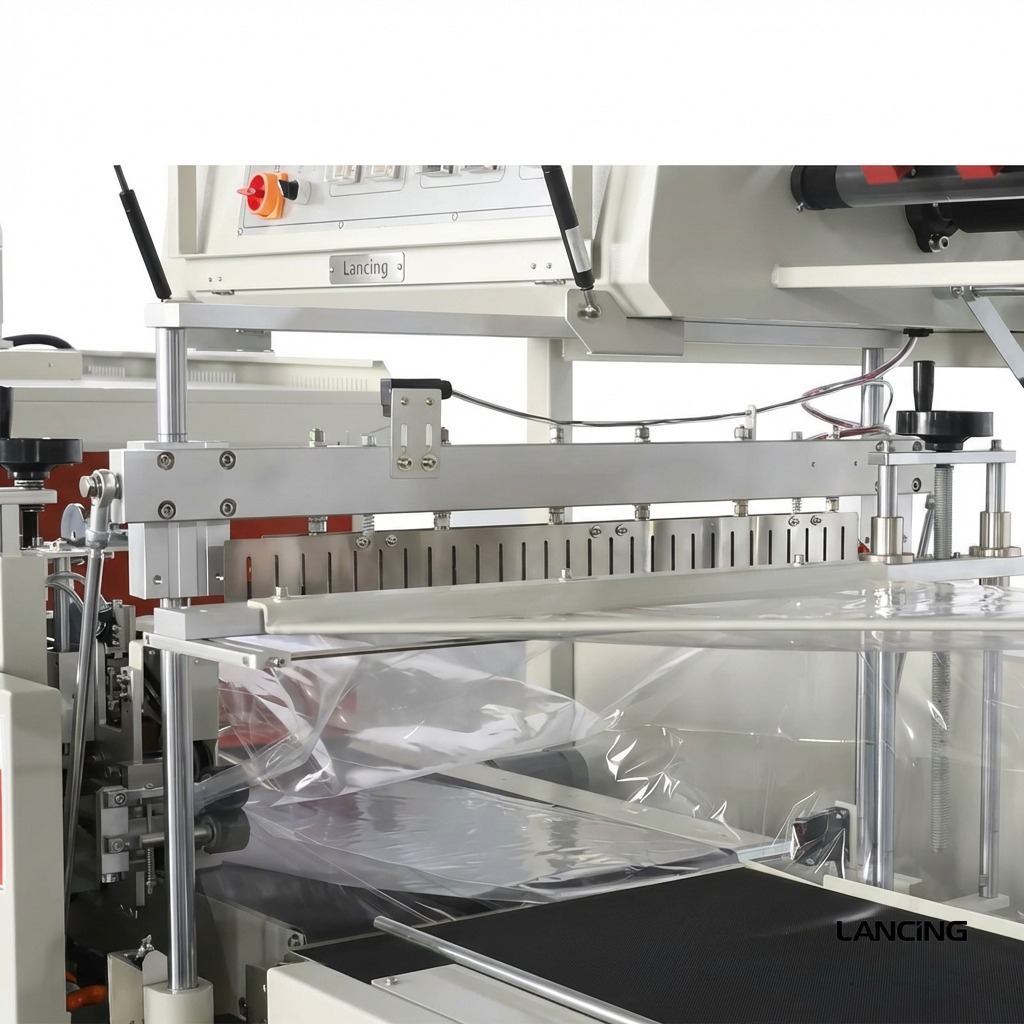
L-sealers and side-seal systems are useful when individual products, cartons, books, boxes or retail packs need a clean film wrap and consistent heat shrink finish.

L-sealers machinery

Available machines

L-sealers range

Compare the relevant machines and send your pack details for a practical recommendation.

What to confirm before specifying l-sealers

Confirm pack dimensions, desired finish, film type, target throughput, upstream equipment, changeover expectations and available site utilities. This avoids selecting a machine that looks suitable on paper but struggles with the real product.

Line integration

Lancing can consider conveyors, infeed timing, pack spacing, tunnel discharge, coding and downstream accumulation so the shrink wrapping machine works as part of the wider line.

Technical selection guidance

Build the L-sealing process around the pack and film window

An L-sealer creates the film enclosure; the heat tunnel then develops the final appearance. Reliable results depend on the sealing envelope, film width, air release, product spacing and tunnel recipe working as a single process.

The published LU-SPL6 data shown below is useful for initial comparison. The accepted output and finish should still be proven with the real product and production-equivalent film.

Sealing envelope and film presentation

The product must fit inside the usable sealing envelope with enough film for the closing seals and subsequent shrink. Measure the finished pack, not only the unwrapped product, and include projections, handles, display tabs and sharp corners.

Film width should be calculated against the pack perimeter and the machine’s reel arrangement, then proven with the intended POF or other compatible film. Excess bag size creates long fins and trapped air; insufficient film can pull against the seal or product.

Seal quality before the tunnel

A tunnel cannot correct a weak or contaminated seal. Check the seal-bar condition, temperature or impulse setting, dwell, pressure, film compatibility and product position before the pack enters the heated zone.

Crumbs, powder, labels and product edges must be kept clear of the seal path. Where contamination is unavoidable, the proposed machine and operating method should be trialled with real production samples.

Air release and shrink balance

A closed film envelope needs a controlled route for trapped air to escape. Perforation, film overlap, seal position and the direction of airflow affect how the bag collapses around the product.

Heavy dog ears or ballooning are often signs that bag size, air release or film position needs correction. Increasing tunnel heat without addressing those causes can worsen corner appearance and reduce the safe process window.

Infeed and discharge integration

Manual, semi-automatic and automatic L-sealing routes require different control of product spacing. Automatic systems need a repeatable product pitch and a clear response to skewed or missing products.

After shrinking, provide enough cooling and conveyor support for the pack to set before it is accumulated, turned, stacked or packed into a case. Confirm conveyor height and line direction at the quotation stage.

Published LU-SPL6 reference data. It is a starting point for selection, not a substitute for a sample and film trial.
Published LU-SPL6 referenceListed valueWhat to confirm by trial
Output15–30 bags/minSustained rate with actual product pitch, sealing cycle and accepted finish
Product relationshipW + H ≤ 700 mm; L + H ≤ 800 mm; H ≤ 150 mmWrapped orientation, seal location, loose-film envelope and format range
FilmPOF or PEFilm construction, gauge, shrink curve, reel data and seal compatibility
Conveyor600 mm beltProduct support, transfers, line height and downstream cooling
Tunnel reference1800 × 750 × 400 mmAperture clearance, airflow and stable dwell-time window
Air supply0.5 MPaAvailable site pressure, quality and connection arrangement

Technical questions buyers ask

When is an L-sealer preferred to a sleeve sealer?

An L-sealer is commonly assessed when the product needs a closed film envelope and a presentation overwrap. A sleeve sealer is often considered for open-sided multipacks where transport bundle strength is the main requirement.

Which film information should be supplied?

Provide material, thickness, layflat or centre-fold width, reel core and diameter, shrink curve, seal window, perforation and any print or slip treatment. A production reel is preferable for trials.

Why does a pack balloon in the tunnel?

The closed bag may be holding too much air or may not have an effective release path. Check bag size, perforation, seal position, film orientation and airflow before increasing temperature.

Can an L-sealer handle several product sizes?

Yes where all formats fit the usable seal and tunnel envelopes and can be presented reliably. Changeover requirements, film widths, recipe control and the smallest unstable product should be reviewed.

What is a useful acceptance standard?

Agree seal continuity, acceptable corner fins, film tension, product condition, transparency and any downstream handling test. Record the approved film, speed and tunnel settings with the sample.

Where is specialist L-sealer information maintained?

Detailed L-sealer category information is available on the related L-sealer machines website. This page focuses on the L-sealer as one route within a wider shrink-wrapping system.
Application review

Submit the product range and film reel specification

Include the minimum and maximum pack dimensions, photographs, target rate, required finish, film data and the available infeed and discharge space.

L-sealer engineering

Control film envelope, seal position and corner finish across the full product range

L-sealing is commonly used to form a substantially enclosed film pack before tunnel shrinking. Reliable selection depends on the loose-film envelope, production film, seal geometry, operator or automatic presentation and the required finish.

Size the loose film, not only the product

The product must fit inside the usable sealing area with enough film for the seal and shrink recovery. Allow for product height, irregular corners, registration and variation. A nominal product size can understate the film envelope needed during the cycle.

Manage trapped air and seal integrity

Air release, film perforation, sealing condition and product geometry affect how the pack collapses in the tunnel. Weak seals, excessive ballooning or tight corners should be diagnosed from the film and seal first rather than corrected by heat alone.

Protect presentation through cooling

Printed cartons, books and retail products may show corner distortion or surface marking if the film is handled while warm. Define downstream guides, inspection and cooling so the accepted finish is retained after the tunnel.

Application evidence

  • Smallest and largest loose-film envelope, including height and irregular features.
  • Production film code, gauge, width, fold and perforation.
  • Preferred seal position and acceptable corner or side finish.
  • Product heat sensitivity, surface marking and label/barcode positions.
  • Required sustained output, loading method and changeover pattern.
  • Tunnel aperture, airflow, speed and downstream cooling route.

Application review

Trial the production film around every product extreme

Send the full product range, intended centre-fold or other film, approved finish, output duty and tunnel/downstream details so the L-sealer route can be checked against the real pack.

Presentation-pack questions

Further questions about L-sealer film and seal control

An L-sealer route must create a controlled loose-film envelope before the pack enters the tunnel. Seal position, film width, air release and product orientation all affect the final appearance.

Why does the L-seal position matter on a presentation pack?

The seal position influences appearance, film distribution and how corners shrink around the product. A seal placed against an unstable edge, printed face or sharp feature may be more visible or more vulnerable during heating and handling.

Confirm the desired display face and acceptable seam location during the trial. The best mechanical route is not always the one that presents the product in the preferred orientation.

How much loose film should be left around an L-sealed product?

There is no universal allowance. The film must be loose enough to enclose the product without overstressing the seal, but controlled enough to avoid excessive corner material and trapped air. Product shape, film shrink behaviour, perforation and tunnel airflow all influence the result.

Approve the envelope with the smallest and largest formats and record the guide and film settings that reproduce it.

What causes film tails or untidy trim at an L-seal?

Possible causes include unsuitable film presentation, contamination, damaged or misaligned seal components, incorrect tension, poor product position or a sealing condition that is not matched to the exact film. The loose-film path should be inspected before tunnel settings are changed.

Only trained and authorised personnel should inspect or adjust sealing components, following the machine instructions and safe isolation procedure.

Prepare a useful enquiry

Provide the display orientation, smallest and largest packs, preferred seam location, production film and accepted corner/trim appearance. Send the application details to Lancing.

Product geometry

Use the loose-film envelope to assess irregular products and process alternatives

An L-sealer route is suitable only when the product can be presented consistently and the film can clear, seal and shrink around the complete geometry.

Irregular products

Include protrusions, sharp corners, unstable bases and product variation in the maximum film envelope. Prove air release, support and cooling with the real extremes.

Irregular-product guide

Air release

Ballooning and slow collapse can originate in bag size, seal, product cavities or the approved perforation. Diagnose those inputs before increasing tunnel heat.

Perforation guide

Alternative pack structure

If the product requires a continuous film tube with longitudinal and cross seals, compare flow wrapping rather than assuming an L-sealed shrink pack is the same result.

Shrink wrap versus flow wrap

Centre-folded film

Size the L-sealer film around the loose pack and seal position

The reel must cover the complete production range without creating excessive fins, trapped air or tension through the seal.

What determines L-sealer film width?

Use product width and height in running orientation, the loose film envelope, seal allowance, corners, protrusions and the practical reel path. Check the smallest and largest formats rather than choosing a reel from one sample.

Why is excessive centre-folded film a problem?

Excess web can create long fins, folds, trapped air and unnecessary material use. It may move the seal away from the intended position and increase the thermal work needed for a clean finish.