Seal
L-sealer
Creates the seal around individual products or grouped packs using suitable shrink film.
View related machineryL-seal lines
An L-sealer and shrink tunnel line is a common route for neat retail presentation packs, boxed goods and printed products.
UK specification advice
The L-sealer creates a two-sided seal around the pack before the product passes through the heat tunnel, where the film shrinks around the product.
This route is often used when the finished pack needs a clean appearance rather than open-sided transit bundling.
The correct system depends on the largest product, the required output, operator loading method and film type.
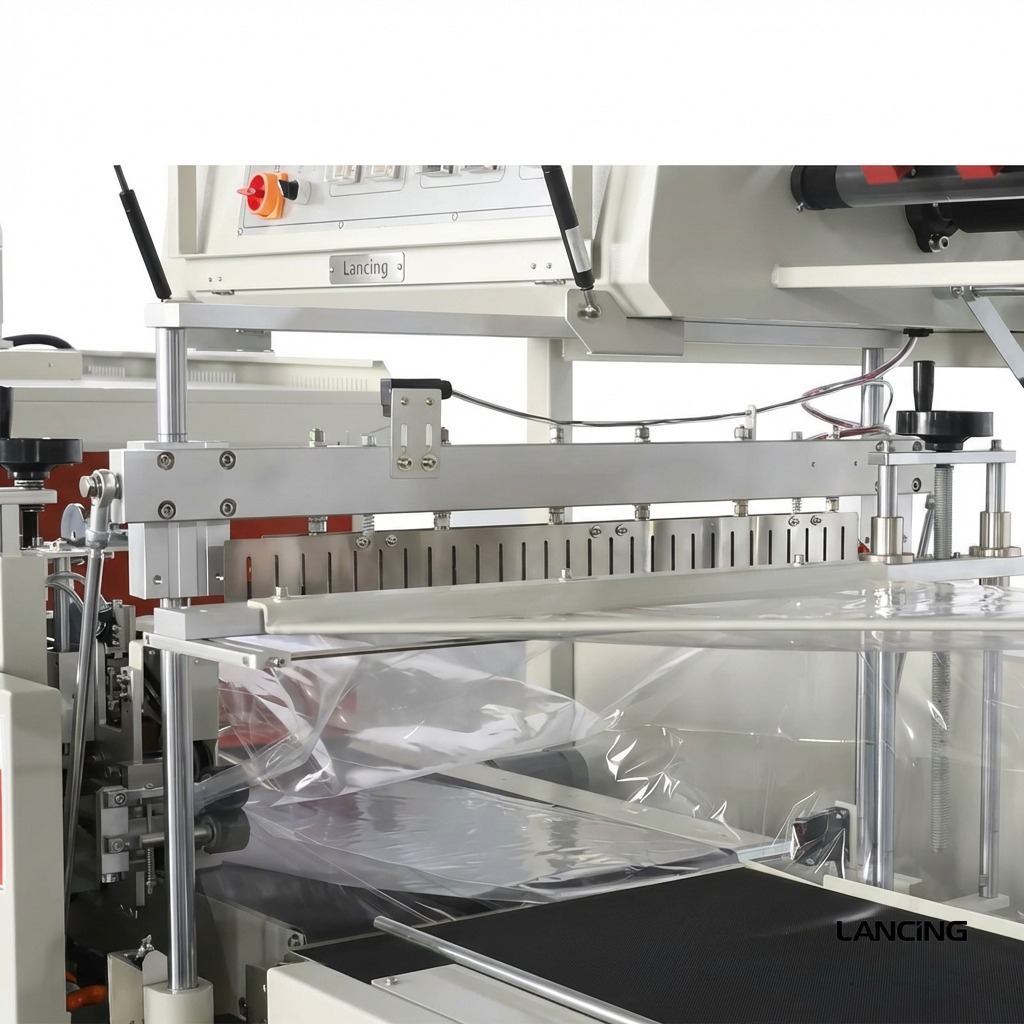
Machinery route
A good result depends on the sealer, film and tunnel working together.
Seal
Creates the seal around individual products or grouped packs using suitable shrink film.
View related machineryShrink
Applies controlled heat and airflow to recover the film around the product.
View related machineryFilm
Often selected for presentation packs because it can give a clean and clear finish.
View related machineryBuying notes
When comparing L-sealer and shrink tunnel lines, check the maximum pack dimensions and allow enough clearance for the film sleeve as well as the product.
Tunnel length, temperature and conveyor speed affect the finish. A short or undersized tunnel can leave loose film or uneven corners.
Operator loading should be considered early. For variable products, an easy-loading semi-automatic line may be more practical than a higher speed automated line.
Common questions
An L-sealer is used to seal shrink film around individual products or packs before heat shrinking.
It depends on output and pack size. Chamber sealers are compact, while L-sealer and tunnel lines suit higher throughput and larger packs.
POF is common for many presentation packs, though the final choice depends on product and finish.
Yes. Many L-sealer and tunnel systems use operator loading with automatic sealing and conveyor transfer.
Next step
Send product dimensions, pack format, approximate output rate and film preference. Lancing can help compare chamber sealers, L-sealers, sleeve sealers, heat tunnels and complete shrink wrapping lines.
Complete L-seal route
An L-sealer and heat tunnel should be specified as one production process. The accepted line rate is governed by product presentation, seal formation, tunnel dwell, thermal loading and post-tunnel handling together.
The sealer must present packs at a rate and spacing the tunnel can process within its approved thermal window. A faster seal cycle is not useful when product spacing, tunnel dwell or cooling becomes the constraint.
The pack is vulnerable between sealing and shrink. Conveyor gaps, guides and product orientation should avoid dragging, puncturing or moving the loose film before it enters stable airflow.
Allow the film to settle before close guidance, accumulation, labelling or case packing. Position inspection where seals, corners and product condition can be assessed without disrupting the line.
Application review
Send representative products, production film, required pack finish, sustained output and the full infeed/outfeed layout so the line can be sized and trialled as one process.