Technical selection guidance
Qualify the LU-BSP6040 against the real wrapped product
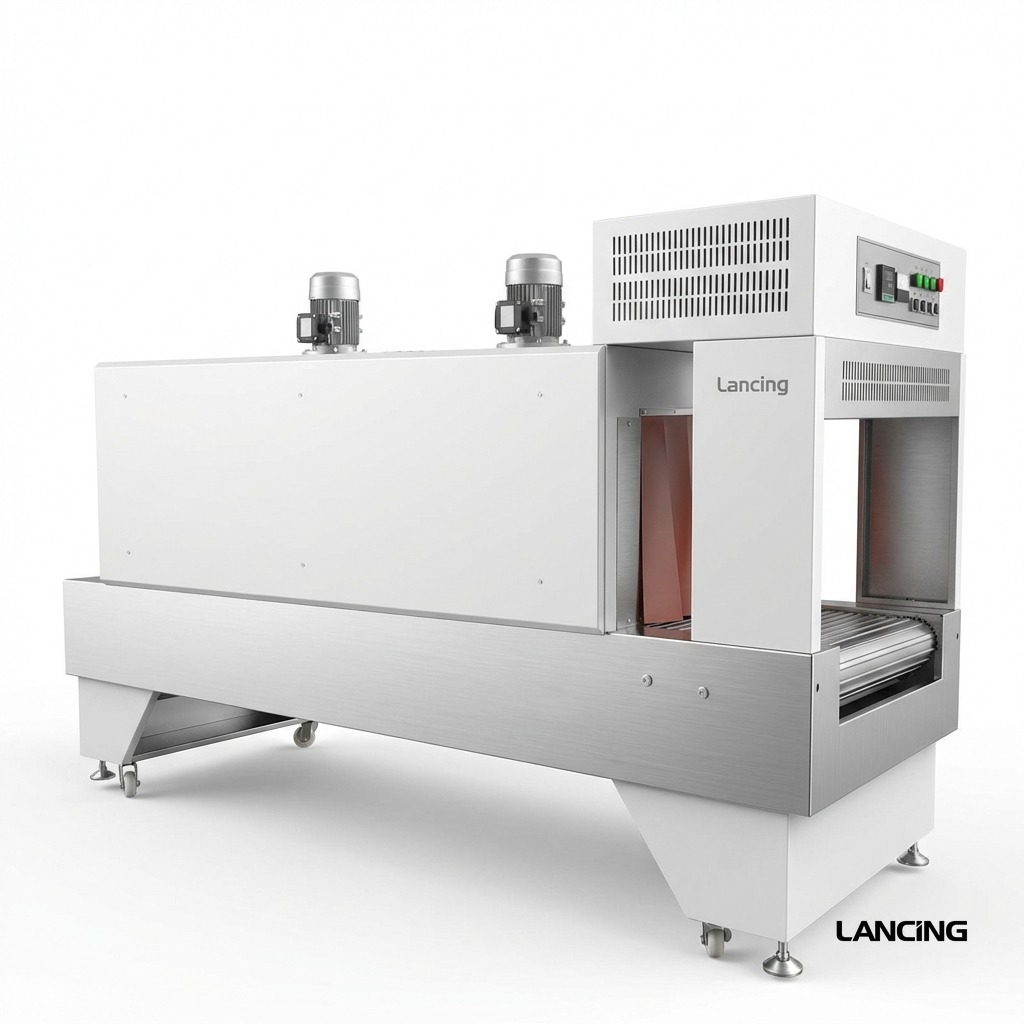
The published LU-BSP6040 data identifies a broad conveyor heat-tunnel route for PE, POF and PVC film. The machine should be selected by its usable product envelope, conveyor duty and stable heat-transfer window rather than by furnace dimensions or maximum belt speed alone.
A representative trial is required where pack appearance, product condition or sustained output is important. The trial should reproduce the intended film, pack spacing and downstream cooling.
Use the published envelope as the first filter
The LU-BSP6040 page lists a 1800 × 600 × 400 mm furnace and products up to 500 × 350 mm. Confirm which product orientation those figures represent and measure the pack with loose film before shrink, including any fins or movement on the conveyor.
The published maximum conveyor load is 50 kg. That figure does not replace a transfer review: a concentrated, unstable or small-footprint load may require a different belt support or guide arrangement even when total weight is below the limit.
Develop a process window for PE, POF or PVC
The machine page lists PE, POF and PVC as applicable films. Each production film still needs its own seal and tunnel recipe based on gauge, shrink curve, perforation, bag size and product heat tolerance.
Begin with film-supplier guidance, then run the smallest, largest, heaviest and most heat-sensitive products. Record the accepted temperature, conveyor speed, airflow condition, product spacing and cooling arrangement.
Relate conveyor speed to production duty
The listed conveying range is 0–15 m/min. Sustainable packs per minute depends on pack pitch, heated length, acceptable dwell time, loading pattern and downstream spacing; belt speed alone is not a production-rate guarantee.
Test a steady sequence after the tunnel is fully warm and under representative thermal load. A single pack can shrink correctly while a continuous line of cold or heavy products changes the result.
Plan electrical, ventilation and access requirements
Published data lists 18 kW and 380 V, 50–60 Hz. The final electrical connection, protection and installation arrangement must be confirmed for the supplied machine and the destination site.
Allow safe access for conveyor, fan, heater and curtain inspection. Review heat discharge, extraction or ventilation and clearance around the machine as part of the line layout rather than after delivery.
Define upstream sealing and downstream cooling
This is the heat-shrinking stage; the film must arrive with the correct enclosure or sleeve and a sound seal. Confirm transfer height and spacing from the upstream wrapper so film does not drag, open or fold at tunnel entry.
Provide enough discharge support for the wrap to set before the pack is gripped, turned, accumulated or stacked. The cooling condition should be included in acceptance testing.
Technical questions buyers ask
Can this heat tunnel be used without a sealer?
It can only shrink film that has already been presented correctly around the product. The appropriate upstream sealer, sleeve wrapper or manual film preparation depends on the required pack.
Does 15 m/min mean every product can run at that speed?
No. The 0–15 m/min figure is the conveyor range. The accepted speed depends on the film shrink curve, heated length, airflow, pack load and required finish.
How is the 50 kg load figure applied?
Treat it as a published conveyor capacity reference, then confirm the actual pack footprint, point loading, product stability and transfers. Do not assume every 50 kg product will run safely.
What creates uneven shrink on one side?
Investigate pack position, airflow, tunnel loading, film overlap, perforation and product spacing. Increasing the overall temperature may not correct a local airflow or presentation issue.
What samples should be sent?
Send the complete format range, production film, the upstream seal or sleeve arrangement and an approved pack standard. Include the heaviest and most heat-sensitive variants.
What should be recorded after a successful trial?
Record product and film codes, orientation, spacing, conveyor speed, temperature, airflow settings where adjustable, cooling arrangement and photographs or a retained approved sample.