L-sealers · Pro automatic

LU-SPL6 Automatic Heat Shrink Tunnel Wrapping Machine

Side sealing and heat tunnel shrink wrapping system for boxes, books, electronics and general retail products.

LU-SPL6 Automatic Heat Shrink Tunnel Wrapping Machine

Machine overview

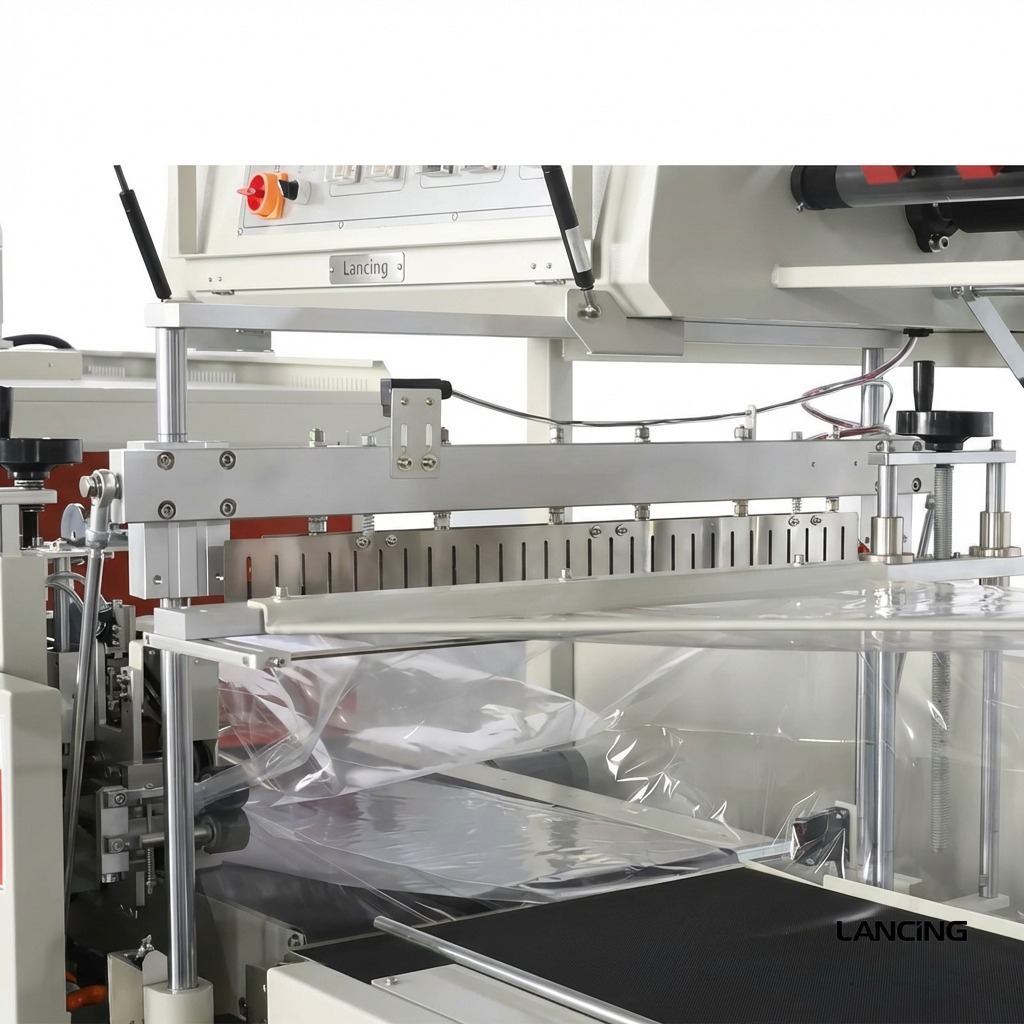
The LU-SPL6 combines side sealing with a heat shrink tunnel to automate film wrapping for a wide range of products. It feeds compatible shrink film, seals the pack and delivers it through a controlled tunnel to create a clean, tight and professional finish.

Throughput15–30 bags/min
Format rangeW+H ≤ 700 mm; L+H ≤ 800 mm; H ≤ 150 mm
Utilities220V 50–60Hz; air pressure 0.5 MPa

Specifications

ModelLU-BF750
Packaging speed15–30 bags/min
Conveyor belt width600 mm
Applicable shrink filmPOF / PE
Film shrinkage ratio60%
Machine weight440 kg
Tunnel size1800 × 750 × 400 mm

Specify this machine

Check suitability against the real product

Final speed and configuration should be confirmed against product dimensions, film type, operator workflow, upstream equipment and downstream handling.

Request configuration advice

Technical selection guidance

Confirm the LU-SPL6 configuration, film route and sustained duty

The LU-SPL6 page describes an automatic film-wrapping and tunnel-shrinking route with published speed, belt, film and tunnel data. Those figures support initial comparison, but the final machine configuration and accepted performance must be tied to the actual product and film.

Qualification should include dimensional fit, stable infeed, seal or film closure, heat exposure, cooling and downstream handling. A maximum-rate empty cycle is not an acceptance test.

Check the dimensional relationships on the real orientation

The published page states W + H ≤ 700 mm, L + H ≤ 800 mm and H ≤ 150 mm in the wider machine reference, with a 600 mm conveyor belt. Confirm how length, width and height are defined for the intended orientation and include loose film before shrink.

Products with handles, projections or unstable bases need a transfer and guide review even when the nominal dimensions fit the stated relationship.

Prove the listed 15–30 bags/min range

The page lists 15–30 bags per minute. Actual accepted output depends on product pitch, film feed, seal cycle, tunnel dwell, cooling and downstream clearance. The trial should state the pack, film and duration used to demonstrate any agreed rate.

Automatic lines should also be tested for start-up, gap changes and the response to a skewed or missing product so that quality is not based only on uninterrupted ideal feed.

Select POF or PE from the required pack

POF and PE are listed as applicable shrink films, but they normally support different pack and sealing objectives. Use the required enclosure, presentation, bundle strength and handling route to choose the film and wrapper configuration.

Supply the exact gauge, width, shrink curve and reel dimensions. The listed 60% shrinkage ratio should not be treated as a guaranteed finished-pack result; actual contraction is governed by the production film and process conditions.

Establish the tunnel and cooling recipe

The published tunnel reference is 1800 × 750 × 400 mm. Check wrapped-product clearance and use temperature, airflow and conveyor speed together to create a stable dwell-time window.

Test under sustained loading, then allow the film to cool before assessing final tension or bundle strength. Downstream conveyors must avoid snagging or compressing the warm wrap.

Integrate compressed air and controls

The wider published reference lists a 0.5 MPa air supply. Confirm pressure, flow, air quality, isolation and connection at the destination site for the final supplied configuration.

Agree conveyor heights, line direction, upstream spacing, guarding, emergency-stop interfaces and downstream accumulation. The wrapper cannot deliver its intended output if product presentation is inconsistent.

Published page data used for comparison. Confirm the final machine identity, configuration and performance in the quotation and acceptance documents.
Published page itemListed valueQualification required
Packaging speed15–30 bags/minAccepted sustained rate with defined product and film
Conveyor belt width600 mmUsable product support, guide clearance and transfers
Applicable filmPOF / PEExact film construction, seal route and required finish
Film shrinkage ratio60% listedUse actual supplier shrink data and sample result
Machine weight440 kgHandling, floor loading and installation plan
Tunnel size1800 × 750 × 400 mmWrapped-pack aperture, airflow and dwell-time window

Related selection pages

Compare the L-sealing route, review the heat tunnel engineering guide, confirm the POF or PE film data, and use the technical buying guide to define the sustained-duty test.

Technical questions buyers ask

Is the LU-SPL6 an L-sealer for every product?

The page presents an automatic wrapping and heat-tunnel route. Suitability depends on the supplied configuration, product, film enclosure and required seal. Confirm the exact application rather than relying on a category label.

Can POF and PE use the same settings?

No assumption should be made. They can require different film handling, sealing and tunnel windows. Create and control a separate approved recipe for each film and pack.

Does the 60% shrinkage ratio define the finished size?

No. It is a listed reference. Actual shrink depends on the film construction, orientation, temperature, dwell, airflow and how the film is restrained by the product.

How should the 15–30 bags/min output be tested?

Use the agreed product and production film, define the accepted pack standard, run after the tunnel reaches stable load and record the number of consecutive accepted packs.

What utilities should be confirmed?

Confirm the electrical supply shown in the final quotation, compressed-air pressure/flow and quality where required, ventilation, line interfaces and safe maintenance access.

What information prevents a poor line interface?

Provide upstream conveyor speed and product pitch, line height/direction, accumulation, product stability, downstream cooling and the required controls response to gaps or faults.
Application review

Send the product orientation, film and line-interface data

Include maximum loose-film dimensions, target rate, upstream pitch, production reel, cooling requirement, utilities and an accepted finished-pack standard.

Seal-to-tunnel diagnosis

Separate film, sealing, infeed and tunnel faults on the LU-SPL6 route

The LU-SPL6 combines multiple process stages, so a finished-pack defect should be traced to the earliest stage that can create it. Correcting the wrong stage can narrow the process window or hide a mechanical condition without removing the cause.

Fault-isolation sequence for the integrated wrapping and tunnel process. Work within the supplied manual, risk assessment and material limits.
Observed resultInspect firstThen confirm
Open, weak or irregular sealFilm compatibility and cleanliness, film presentation, seal contact, pressure/dwell and product interferenceDo not expect the heat tunnel to repair a defective seal; retain an accepted pre-tunnel seal sample
Excess loose film or large finsBag size, product orientation, dimensional settings and seal positionAir release, film shrink direction, corner airflow and the product’s ability to resist film pull
Holes, splits or burnt areasSharp edges, trapped film, damaged reel, seal cut and direct contact with a hot or moving surfaceLocal airflow, actual exposure, film gauge and whether the defect appears before or after tunnel entry
Pack skew or product movementInfeed pitch, guides, base stability, transfer level and product alignment before wrappingAsymmetric film coverage, seal position, airflow and cooling support
Loose or uneven shrinkCorrect film code, perforation, tunnel loading, fan/airflow condition and measured conveyor speedTemperature, dwell window, pack spacing and the result after complete cooling
Quality falls at the published production rangeActual accepted pack rate, product pitch, seal cycle, film feed and downstream clearanceHeater recovery, tunnel load, restart behaviour and whether the 15–30 bags/min reference has been qualified for this exact product and film

Create inspection points before and after the tunnel

Inspect film tracking, bag size, seal position and seal continuity before the pack enters the tunnel. Inspect shrink balance, corners, product movement and surface condition after the film has cooled. This separation shows whether the fault was already present before heat was applied.

Retain photographs or reference packs at both points for the approved product and film. A single finished-pack image cannot identify where the variation began.

Diagnose at steady production load

The page lists 15–30 bags/min, a 600 mm belt, POF or PE and a 1800 × 750 × 400 mm tunnel reference. Test the agreed product at a sustained accepted rate with defined pitch, not by increasing the speed until quality fails.

Record the actual film, measured belt speed, product temperature, airflow condition, tunnel loading, cooling and rejected-pack reason. Include a normal line gap and restart so the approved process is not limited to uninterrupted ideal feed.

Check compressed-air and control stability

The wider page reference lists 0.5 MPa air pressure. Confirm the final machine’s required pressure, flow, quality and connection, and observe the supply during the accepted run. A pressure reading without adequate flow may not represent dynamic operation.

Agree the response to missing, skewed or backed-up products and the interface with upstream and downstream emergency stops. Fault recovery must not send an unsealed or overheated pack into the next process.

Retain a controlled route for each film

POF and PE can require different film handling, sealing and tunnel conditions. Identify each reel and retain a separate approved recipe and pack standard where the routes differ.

Use the film-change guide for reel evidence, the heat-tunnel page for steady-state acceptance and the L-sealer route for seal-envelope selection. Detailed specialist L-sealer intent remains with lsealermachines.co.uk.

Model application review

Qualify the LU-SPL6 route from sealing through tunnel discharge and cooling

This page publishes a 15–30 bags/min range, 600 mm conveyor belt, POF/PE film, a 60% film shrinkage ratio, 440 kg machine weight and an 1800 × 750 × 400 mm tunnel. The Product data also lists model LU-BF750. Application acceptance still depends on the real pack and film.

Published data retained from this model page. Final suitability and configuration must be confirmed against representative products, film, site services and trials.
Published itemValueHow to use it
Published model within Product dataLU-BF750Use both the page reference and published model identity when confirming the exact supplied configuration.
Packaging speed15–30 bags/minTreat as published machine data and prove sustained accepted output with the real sealing and tunnel duty.
Conveyor belt width600 mmCheck the supported wrapped pack, guides and transfer clearance.
Applicable shrink filmPOF and PETrial the exact production construction and approved seal method.
Film shrinkage ratio60%Do not treat a single published ratio as a universal finished-pack setting; use supplier data and representative trials.
Tunnel and machine dataTunnel 1800 × 750 × 400 mm; machine weight 440 kgUse for preliminary aperture, layout and access screening pending final configuration.

Separate sealing faults from tunnel faults

Inspect the film identity, film path, seal and air release before increasing heat. A weak seal or trapped air can create a loose or damaged pack that tunnel changes cannot correct reliably.

Challenge loading and restart

Run normal spacing, the highest thermal load, production gaps and restart. Record actual speed and settings so the accepted result can be reproduced after interruptions.

Confirm downstream handling

Support the pack at tunnel discharge and allow cooling before close guides, compression or accumulation. Include the next machine and available distance in the layout.

Information required to confirm this application

  • Wrapped pack dimensions, weight and support area.
  • Sealing route and production POF or PE film data.
  • Required accepted output and loading pattern.
  • Product heat sensitivity and accepted pack finish.
  • Infeed, tunnel discharge, cooling and downstream interfaces.
  • Site access, services, working clearance and final configuration.

Application review

Confirm the machine against the real production duty

Send the wrapped pack, sealing method, production film, required accepted output and full line layout so the published LU-SPL6 route can be checked under realistic duty.