Machine range

Shrink wrapping machines

Compare sleeve sealers, L-sealers, heat tunnels, sleeve applicators and chamber-sealer routes for product presentation, transit packaging and multipack bundling.

Technical selection guidance

Choose the machine family from the real pack requirement

The strongest equipment choice starts with the pack geometry, film and line duty, then works back to the sealing and tunnel technology. The comparison below helps separate full overwrap, open-sided sleeve bundles, local sleeve shrinking and compact chamber processing.

No route should be approved from a product name alone. Representative samples and a written acceptance standard are needed wherever finish, heat sensitivity or bundle strength is commercially important.

Full overwrap with an L-sealer

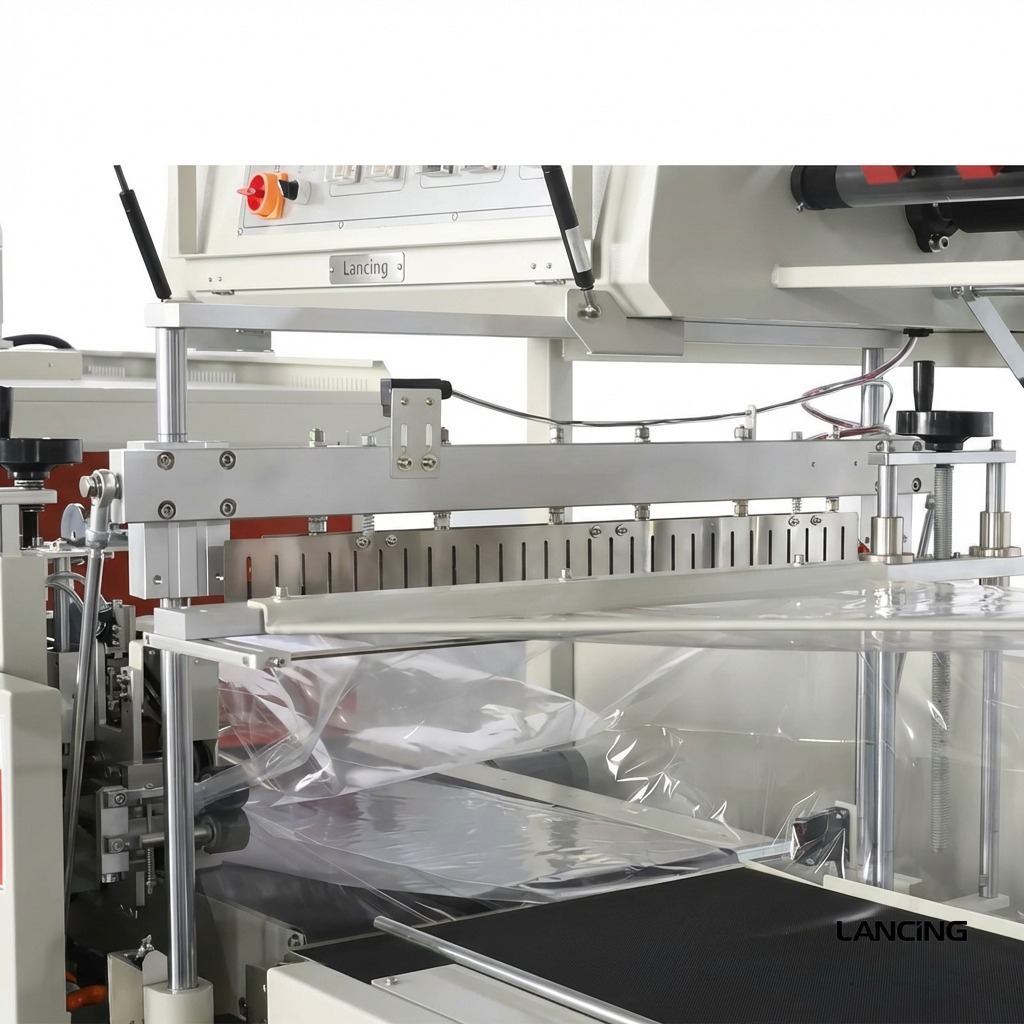
An L-sealer forms a closed film envelope around an individual product or collated pack before it enters a heat tunnel. It is normally considered where presentation, dust protection or full enclosure is more important than an open-ended transport bundle. Product length, height, film width, seal-bar envelope and infeed method determine the practical machine size.

For detailed L-sealer selection that would otherwise duplicate a specialist site, use L-sealer machines. The information here concentrates on how the sealer interfaces with the tunnel and the rest of a shrink-wrapping line.

Sleeve wrapping for bundles

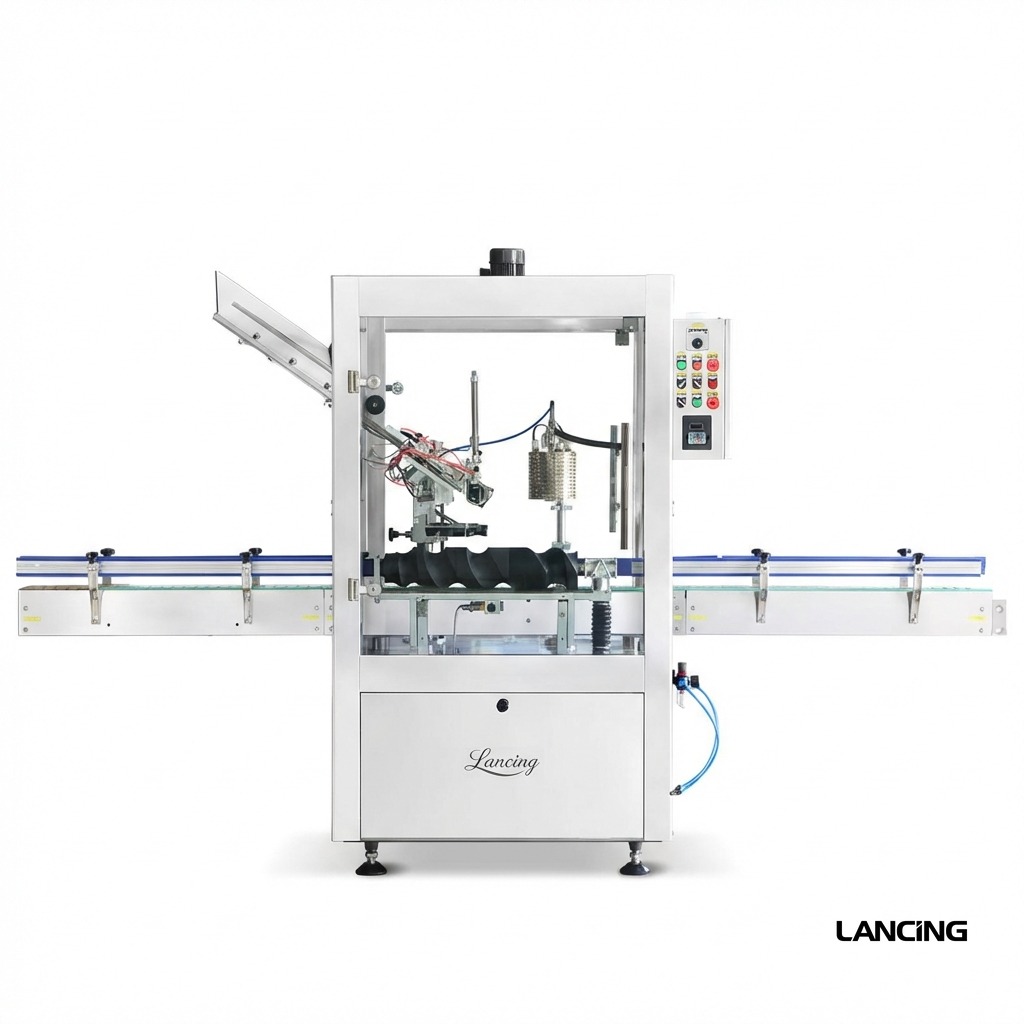
A sleeve sealer places film around a group while leaving openings at the sides. It is commonly assessed for bottles, cans, trays, cartons and other multipacks where bundle strength and transit handling are priorities. PE film, pack stability, grouping method and cooling support are important because the film contracts around the group as it leaves the tunnel.

The specialist sleeve-sealer website owns deeper sleeve-sealing intent; this hub links that route to tunnel, conveyor and pack-trial requirements.

Heat tunnel as a controlled process

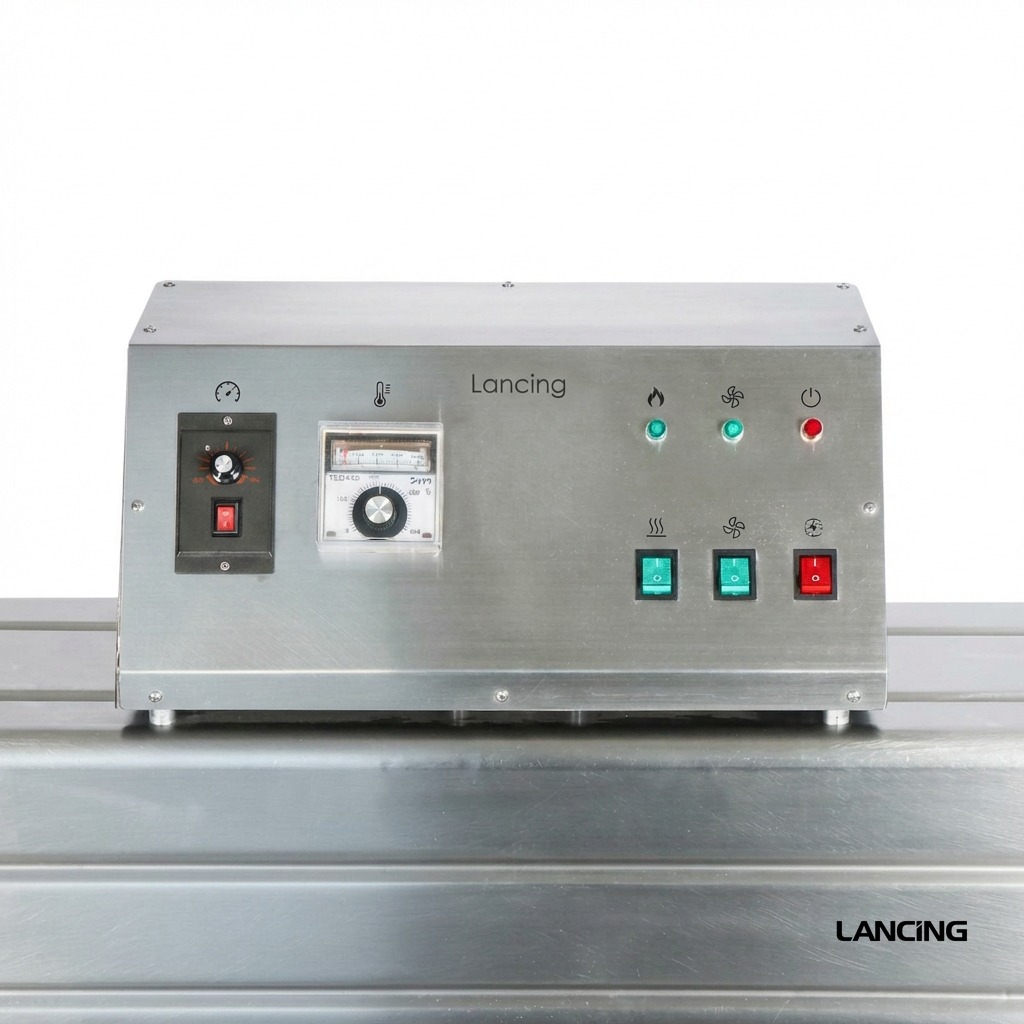
A shrink tunnel is not simply a hot chamber. Repeatability depends on the relationship between airflow, temperature, conveyor speed, heated length, product load and cooling after discharge. A setting that works on an empty conveyor may not remain stable when a continuous stream of cold or heavy products enters the tunnel.

Aperture clearance should be assessed with the wrapped pack, including film fins and any movement on the conveyor. Excessive clearance can make air control less efficient, while insufficient clearance risks contact and uneven shrink.

Local sleeve and tamper-band shrinking

Bottle labels, neck sleeves, capsules and tamper bands require heat to be directed at a limited area of the container. Container material, filled or empty condition, closure sensitivity, sleeve print registration and the required shrink position all need to be checked.

Where the requirement is specifically sleeve placement before shrinking, the dedicated sleeve applicator website provides the specialist application route.

Compact chamber route

A chamber machine combines sealing and shrinking in one enclosed cycle. It can suit lower-volume work where floor space, simplicity and frequent product changes matter more than continuous-flow output. The chamber dimensions, hood clearance, seal arrangement and product heat sensitivity still need to be matched to the pack.

When the duty increases, separate sealing and tunnel stages usually provide more control over product spacing, dwell time and line integration.

Automatic line integration

Automatic shrink wrappers depend on consistent product spacing and reliable group formation. Define whether the upstream equipment supplies single products, pre-collated groups or trays, and whether the wrapper must create the group itself.

Confirm conveyor heights, line direction, accumulation, guarding interfaces, emergency-stop philosophy and the required response to missing or misaligned products. These details prevent an apparently suitable standalone machine from becoming a bottleneck after installation.

Project information that should be agreed before final machine selection.
DecisionEvidence to provideWhy it changes the solution
Pack envelopeMinimum and maximum wrapped length, width, height and weightControls sealer opening, film width, tunnel aperture, conveyor support and load
Film routeMaterial, gauge, layflat width, shrink curve, perforation and reel dataControls sealing method, heat exposure, tracking and air release
Output dutyTarget packs/min, shift pattern, batch size and changeover frequencyDistinguishes chamber, semi-automatic and automatic routes
Product behaviourStability, heat sensitivity, sharp edges, surface marking and deformation limitsControls handling, temperature window, airflow and cooling
Line interfacesInfeed pattern, conveyor height, discharge requirement and downstream processControls grouping, gaps, controls, guarding and accumulation
Acceptance standardPhotographs or approved samples defining seal and shrink qualityCreates measurable trial and commissioning criteria

Technical questions buyers ask

Which shrink-wrapping route is best for a single boxed product?

A full overwrap created by an L-sealer or another suitable film-enclosing system is often assessed first, but the product dimensions, required finish, film and target output determine the final route.

Which machine type is normally assessed for bottle multipacks?

Sleeve wrapping with a suitable shrink tunnel is commonly considered for grouped bottles and containers. The pack pattern, bottle stability, tray or pad requirement, film gauge and handling duty need to be tested together.

Can one heat tunnel run different film materials?

Some published tunnels list PE, POF and PVC compatibility, but each material has a different processing window. Suitable sealing, airflow, temperature, speed and cooling must be established for every pack and film combination.

What makes an automatic shrink wrapper reliable?

Consistent upstream presentation, controlled product gaps, repeatable film tracking and sealing, a stable tunnel recipe, adequate cooling and a downstream conveyor that accepts the finished pack without compression or snagging.

How should a sample trial be judged?

Agree acceptable seal integrity, film tension, corner appearance, aperture clearance, product condition and pack stability before the test. Record the film, temperatures, speed and product state so the result can be reproduced.

When is a complete packaging-line review needed?

Use a full line review when the shrink wrapper must be coordinated with filling, capping, labelling, coding, inspection, case handling or palletising. The packaging lines site covers that wider integration intent.
Application review

Build the machine brief around the finished pack

Send the full product range, intended film, target output and line layout. The quotation can then identify the correct wrapper, tunnel, conveyors and controls rather than treating each machine as an isolated item.

Verified model comparison

Compare the published machine data before requesting a product trial

The models below cover different parts of the shrink-wrapping process. Their published figures are useful for shortlisting, but each value must be read with the product orientation, film, line interfaces and required acceptance standard.

Published data already shown on the corresponding machine pages. The final quotation and trial determine the supplied configuration and accepted performance.
Machine and process routePublished selection dataWhat the project must confirm
LU-SPL4 bottle wrapping and shrinking system0–6 packs/min; bottles 60–120 mm diameter and 100–330 mm high; maximum package 400 × 120 × 330 mm; film width up to 560 mm; payload up to 20 kg; PE shrink film listedEvery bottle and group pattern, collation, filled-pack weight, film construction, bundle handling, cooling and the sustained accepted rate
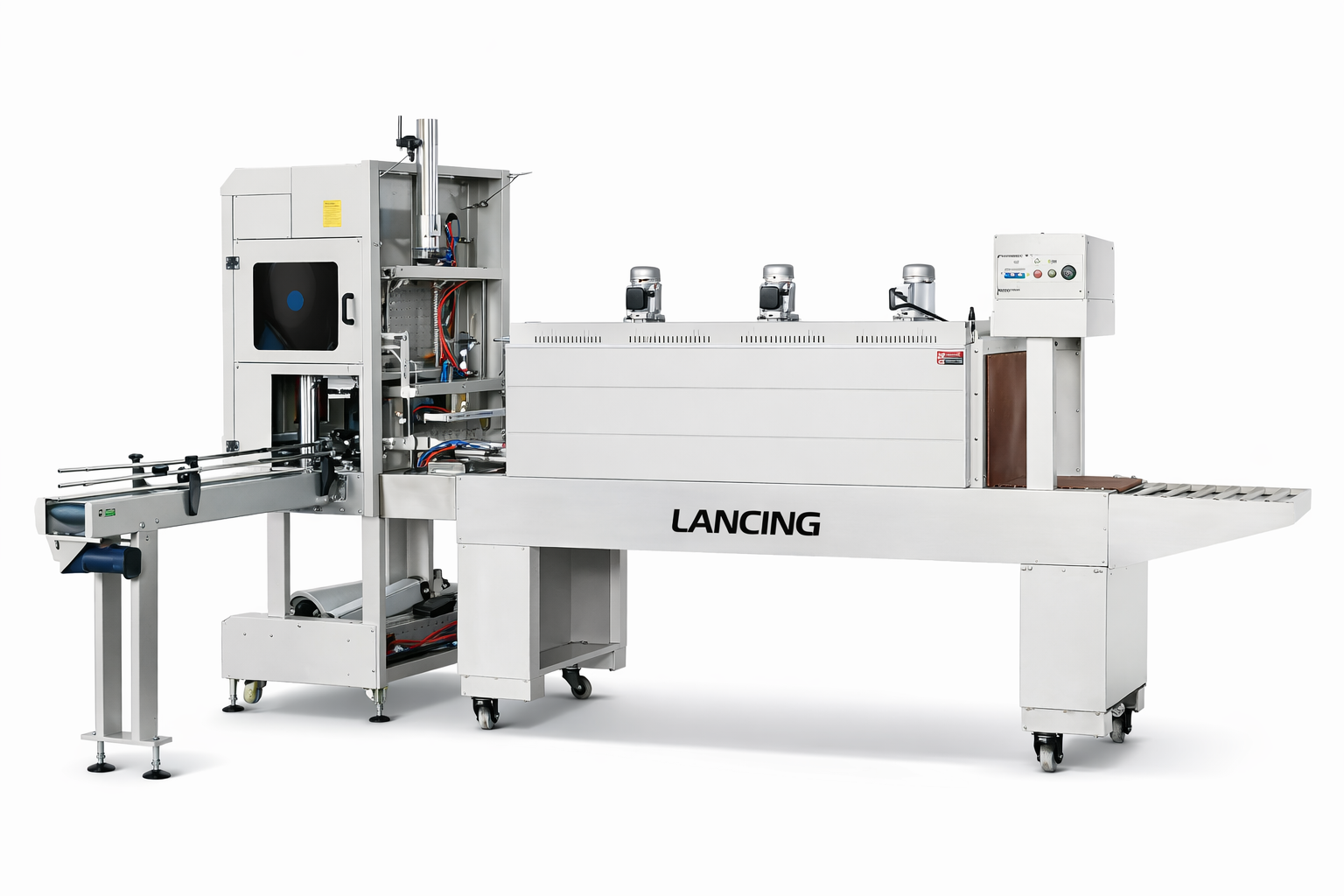
LU-SPL6 automatic wrapping and tunnel system15–30 bags/min; 600 mm conveyor belt; POF and PE listed; tunnel reference 1800 × 750 × 400 mm; 0.5 MPa air referenceDimension definitions and orientation, film closure, seal quality, compressed-air demand, infeed pitch, tunnel recipe and downstream clearance
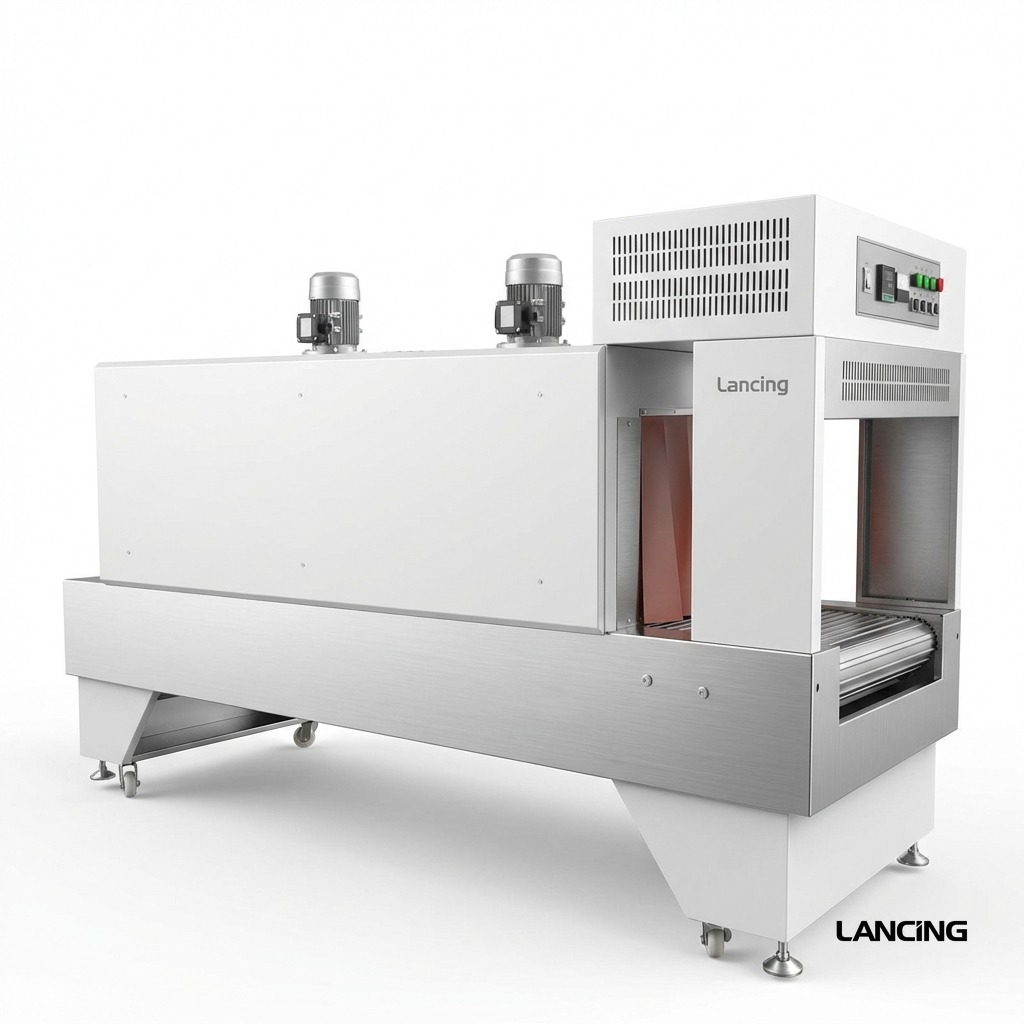
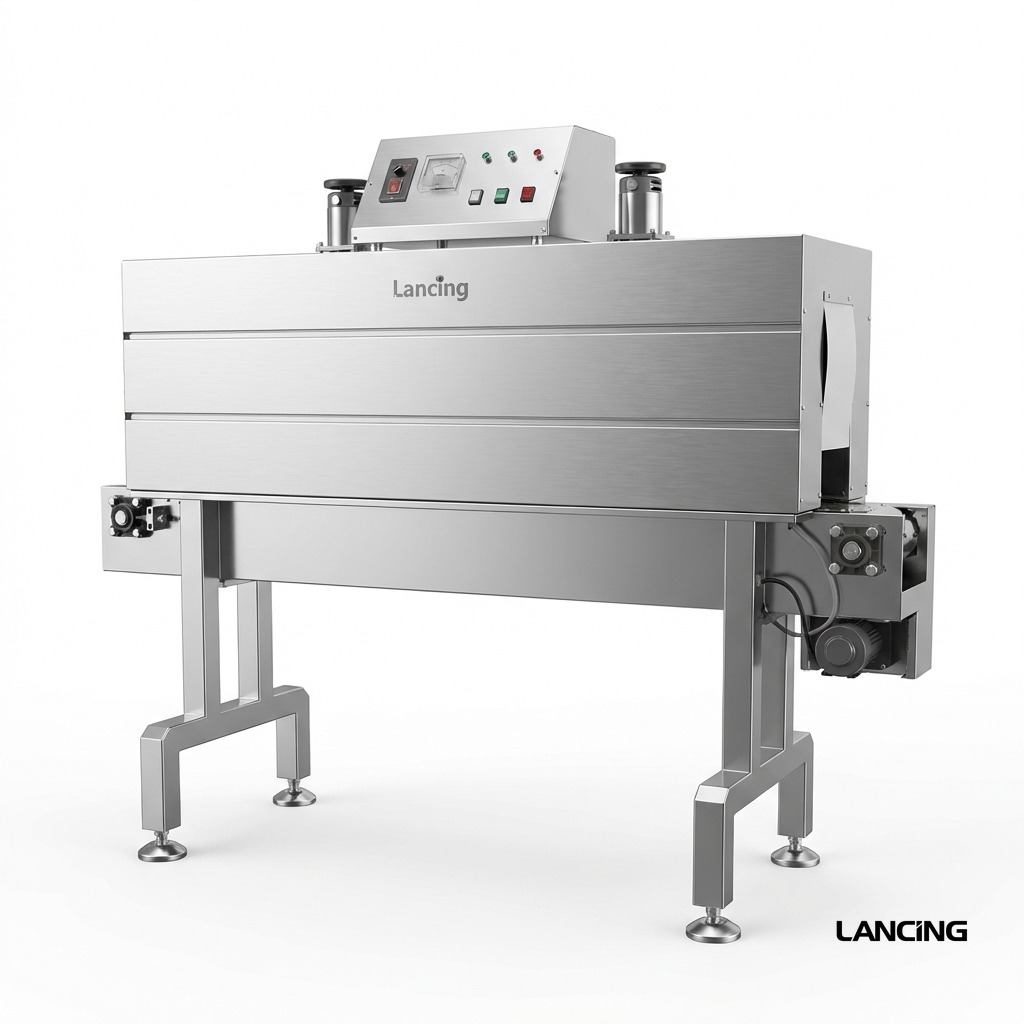
LU-BSP6040 automatic film heat tunnel0–15 m/min; furnace 1800 × 600 × 400 mm; product reference up to 500 × 350 mm; conveyor load up to 50 kg; PE, POF and PVC listed; 18 kWUsable wrapped-pack aperture, load distribution, belt support, actual dwell window, electrical supply, ventilation and steady-state thermal loading
LU-SX403 bottle sleeve heat tunnel0–10 m/min; 0–250°C listed range; 8 kW; container reference up to 120 mm diameter × 310 mm highContainer and closure heat tolerance, sleeve placement, label distortion, line pitch, local airflow and inspection after cooling
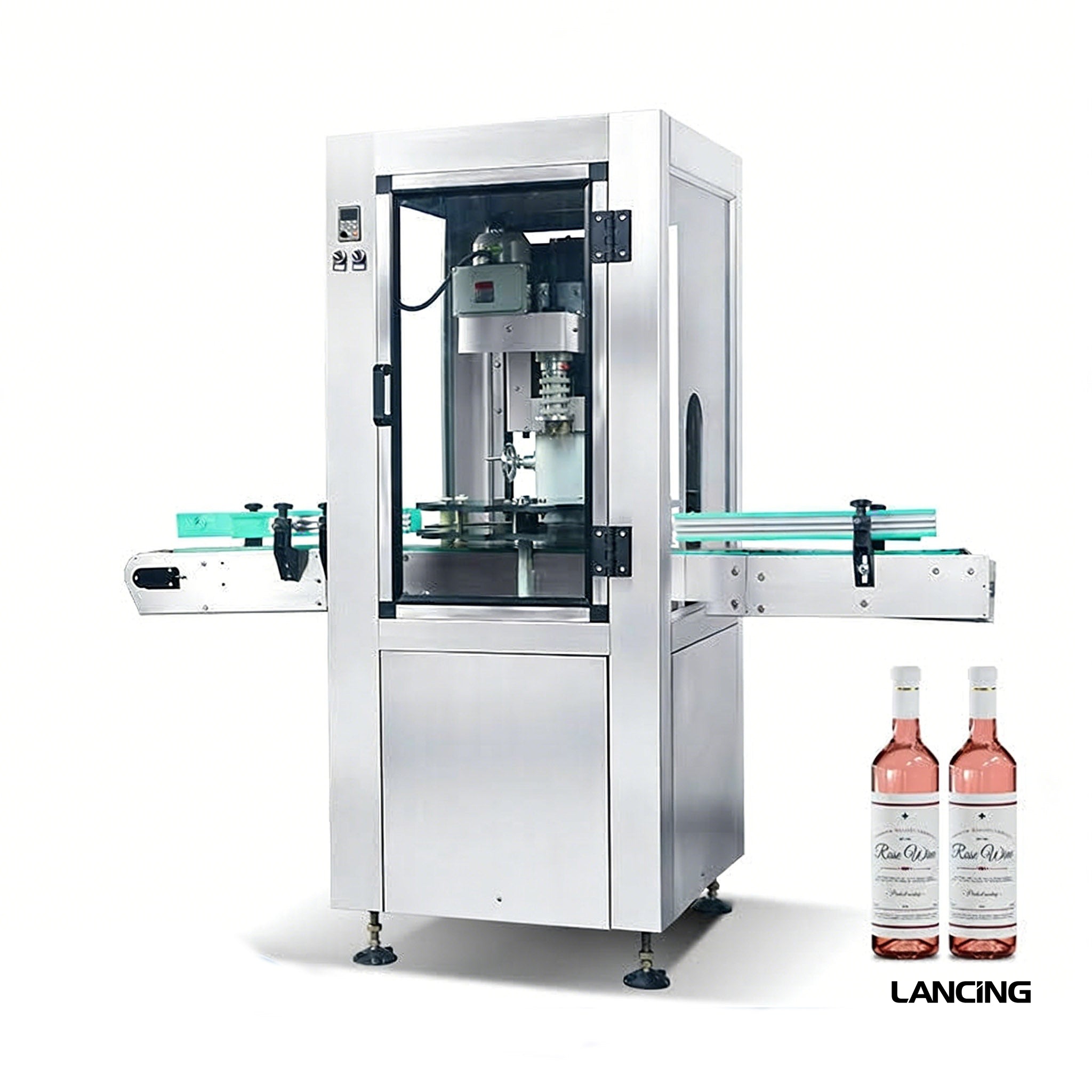
LU-SXRS1 bottle capsule shrinkerUp to 2,000 bottles/hour; bottles 60–100 mm diameter and 180–350 mm high; capsule reference 30–70 mm high and 30–50 mm diameter; PVC listed; 0–300°C; 4 kWFilled bottle, capsule construction, closure response, placement, approved visual finish and integration with the actual conveyor line
LU-CSM1 bottle neck capsule shrinking machine1,200–2,400 bottles/hour depending on model; bottle height 150–300 mm; 1.5 kW; aluminium foil or PVC depending on modelExact model, bottle and capsule dimensions, material route, loading method, finish standard and production duty
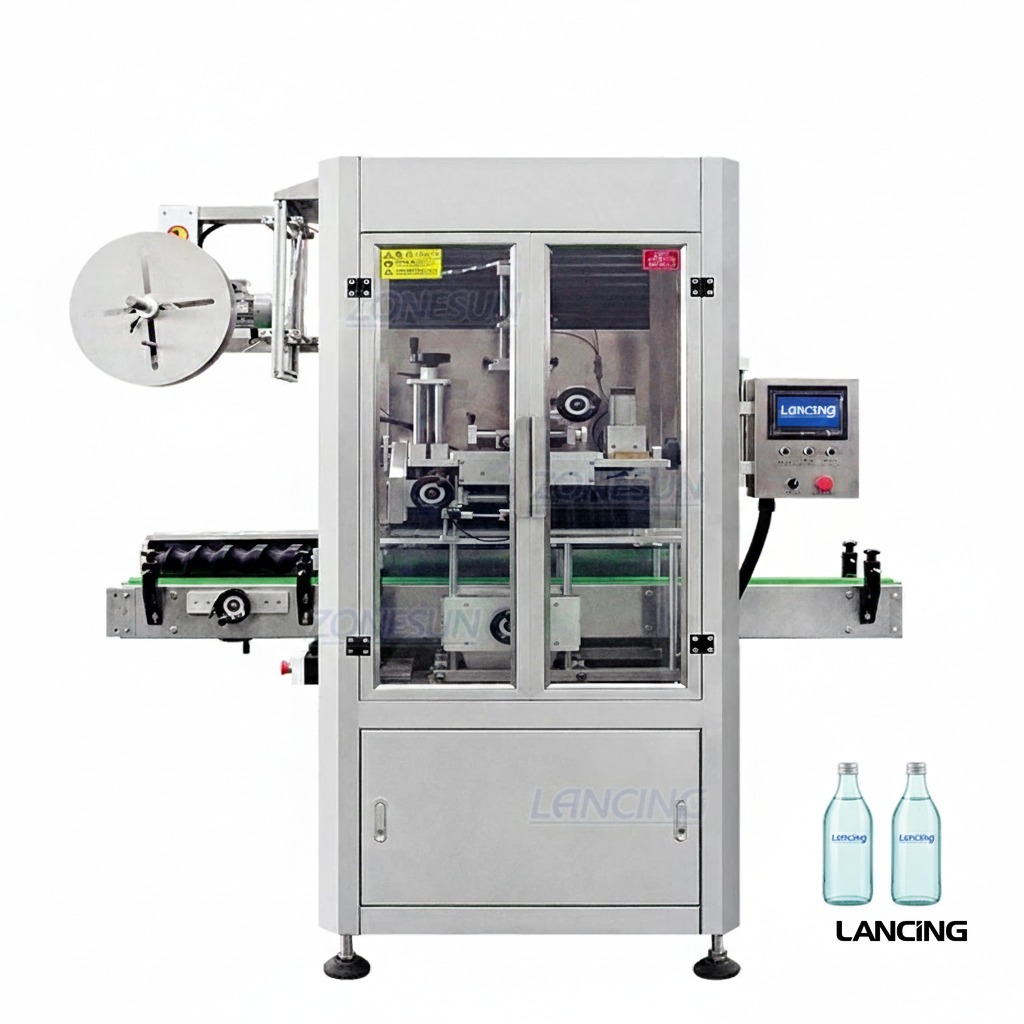
LU-STB150 automatic sleeve labelling machineUp to 150 bottles/min depending on label length; bottle diameter 28–125 mm; bottle height 30–280 mm; label length 30–250 mm; label thickness 0.03–0.13 mmContainer control, sleeve layflat and print repeat, cut and placement tolerance, downstream shrink process and the production-equivalent sleeve reel

Use published figures as filters, not acceptance promises

A speed range does not identify the product, film, pack quality or duration used to obtain it. A physical envelope does not confirm stable transfer, usable clearance or the effect of loose film. Power and temperature ranges do not define the approved recipe. Shortlist machines using the published data, then qualify the real duty through samples and an agreed run plan.

For a tunnel-only requirement, continue to the heat tunnel engineering page. For an automatic line, use the automatic shrink wrapping guide to define collation, spacing and controls.

Keep specialist page ownership clear

This hub owns the cross-process comparison. Detailed L-sealer selection is handled by the L-sealer machinery website, specialist bundle wrapping by the sleeve-sealer website, and sleeve placement by the sleeve-applicator website.

Where shrink wrapping is one stage in a larger filling, capping, labelling or end-of-line project, the packaging lines resource is the correct route for the wider line. This prevents one page from trying to own unrelated machinery intent while retaining a clear path for the buyer.

Machine selection

Compare verified machine data against the complete production duty

The strongest machine shortlist combines published capacity with the product, film, line duty and acceptance evidence. The table retains the verified data already published on the individual model pages and shows how to use it without treating a headline value as a guarantee.

Match usable capacity, not only outside dimensions

Check the largest wrapped pack against the usable sealer envelope, tunnel aperture and conveyor support. Allow for loose film, product presentation, guides and transfers. A pack that only just fits a nominal opening can be difficult to run consistently once film, movement and tolerances are included.

Separate peak speed from sustained output

Published speed is a starting point. Sustainable line output also depends on infeed presentation, grouping, seal cycle, tunnel dwell, thermal recovery, cooling, changeover and downstream acceptance. Specify the required good packs per production period and the conditions under which that result must be demonstrated.

Confirm the production film

Provide the reel label and supplier data rather than describing film only as “shrink wrap”. Film type, construction, gauge, width or layflat, shrink curve and perforation affect both sealing and shrinking. Trial the intended production reel wherever possible.

Define the line interfaces

Record conveyor height and direction, available accumulation, product pitch, guide requirements, stop/start logic, emergency-stop philosophy and the handling needed after the tunnel. Integration can be more important to line reliability than the shrink machine’s isolated cycle.

Published information already present on this website. Values describe the named machine page and do not replace an application-specific quotation or trial.
Machine or routePublished application dataPublished capacity or envelopeSelection use
LU-BSP6040 film heat shrinking machinePE, POF and PVC film; conveyor loading stated as maximum 50 kgConveying speed 0–15 m/min; furnace 1800 × 600 × 400 mmCheck a pre-wrapped product against tunnel clearance, belt support, film response and sustained thermal load
Bottle sleeve heat shrinking machineGlass and plastic bottles and similar container sleevesConveying speed 0–10 m/min; 8 kW heating tube; controller range 0–250°CUse for sleeve-label shrinking only after confirming container, label, closure and print response
LU-SPL4 bottle wrapping and shrinking systemPE shrink film; tunnel compatibility stated for PVC, POF and PE0–6 packs/min; maximum package 400 × 120 × 330 mm; payload up to 20 kgCompare the bottle group, pack weight, film width, collation method and accepted bundle finish
LU-SPL6 wrapping routePOF and PE shrink film; product page lists model LU-BF75015–30 bags/min; 600 mm conveyor belt; tunnel 1800 × 750 × 400 mmConfirm the real pack and sealing route because published throughput still depends on product presentation and film
LU-CSM1 neck capsule machineAluminium foil or PVC capsules depending on model1200–2400 bottles/hour; bottle height 150–300 mmCheck capsule and bottle geometry, closure sensitivity and the upstream/downstream bottle pitch
LU-SXRS1 capsule shrinking machinePVC capsules; controller range 0–300°C2000 bottles/hour; capsule height 30–70 mm and diameter 30–50 mmUse the published envelope to shortlist, then prove finish and product condition with production capsules

Information to attach to a machinery comparison

  • Each product’s length, width, height and complete pack weight, including the extremes rather than an average only.
  • The pack pattern, orientation, infeed condition and whether the group is stable without the film.
  • Production film supplier, code, material, gauge, width or layflat, reel dimensions and shrink data.
  • Required sustained output, shift pattern, expected production gaps and changeover frequency.
  • Available electrical, pneumatic, extraction or ventilation services as applicable to the proposed equipment.
  • Upstream and downstream equipment, conveyor height, direction, available footprint and cooling distance.
  • An approved finished pack, defect limits and any product or label temperature restrictions.
  • Representative samples and enough production film for setup, sustained running and fault-recovery checks.

Application review

Ask Lancing to turn the shortlist into a testable proposal

Provide the production extremes, film reel data, required good-pack output, line layout and acceptance standard. The application can then be compared with the verified machine envelopes and the appropriate trial route.

Selection questions

Questions to resolve before comparing shrink wrapping machines

A machine family should be selected around the complete format range and operating method, not one convenient sample or one isolated specification value.

Why does a shrink wrapping machine specification sometimes change after sample testing?

Testing can reveal variables that photographs and dimensions do not show, such as pack instability, film tension, trapped air, product heat response, seal position, cooling time or the way a group transfers between conveyors. Those findings may change the sealer type, tunnel configuration or level of automation.

A specification change after a representative trial is not automatically a problem; it can be evidence that the final proposal is being based on the real pack rather than an assumption.

Should a shrink wrapping machine be selected around the largest product only?

No. The largest product establishes one physical boundary, but the smallest product can expose equally important limits in film control, sealing, guide adjustment, sensing and conveyor support. The full format envelope and the changeover between extremes should be assessed together.

Include unstable, light, dense and heat-sensitive variants as well as the maximum dimensions. A machine that clears the largest pack may still be unsuitable for the smallest production format.

How can future products be allowed for without oversizing the shrink line?

Define a realistic future format envelope and the interfaces that genuinely need spare capacity. Allowing controlled adjustment in product guides, film width, seal position, tunnel aperture and conveyor controls is more useful than assuming the machine must handle every possible product.

Unbounded future-proofing can make the line harder to control for today’s packs. State the likely future dimensions, weights, pack patterns and output so the reserve can be engineered deliberately.

Prepare a useful enquiry

Provide every production format and explain which future products are realistic rather than asking one machine to cover an undefined range. Send the application details to Lancing.

Pack formation

Select the machinery route from product support, film envelope and finished-pack structure

The same product can need a different machine when its group pattern, support, seal or required enclosure changes.

Individual close-fitting packs

Start with an L-sealer, side-sealing route or chamber machine when a product can be presented within a controlled loose-film envelope. Check seal position, product height, corners, air release and heat response.

Irregular product selection guide

Supported and unsupported multipacks

Start with a sleeve sealer and tunnel when bottles, cans, cartons or trays need an open-sided bundle. Decide whether the group needs a tray, pad or trayless route before film and machinery are finalised.

Tray, pad and trayless comparison

Continuous sealed individual packs

A requirement for a continuous film tube with longitudinal and cross seals may belong to flow wrapping rather than shrink wrapping. Compare the pack structure before forcing the product into the wrong process.

Shrink wrap versus flow wrap

Controlled heat and pack transfer

A tunnel route must match the conveyor support, actual dwell, airflow, loading and cooling. Film air release and transfer stability should be proved with production-condition samples.

Tunnel conveyor guide · Air-release guide

Shortlist evidence

Four checks that prevent a false machine match

Use these detailed resources when a broad machine family appears suitable but the production evidence is incomplete.

Film must fit both product and reel path

Measure the smallest and largest formats, identify centre-folded, single-wound, tubing or sleeve film and confirm reel core, outside diameter, winding direction and seal allowance. Use the film width and layflat guide.

Sleeve heat source is an application decision

For bottle sleeves and bands, compare hot air and steam through the production sleeve, filled container, site utilities and accepted finish. Compare sleeve-tunnel heat media.

Support scope starts with exact machine evidence

Model, serial, component references, product, film, recipe and fault history are required before a service or spare can be scoped. Prepare the support request.