Automation guide

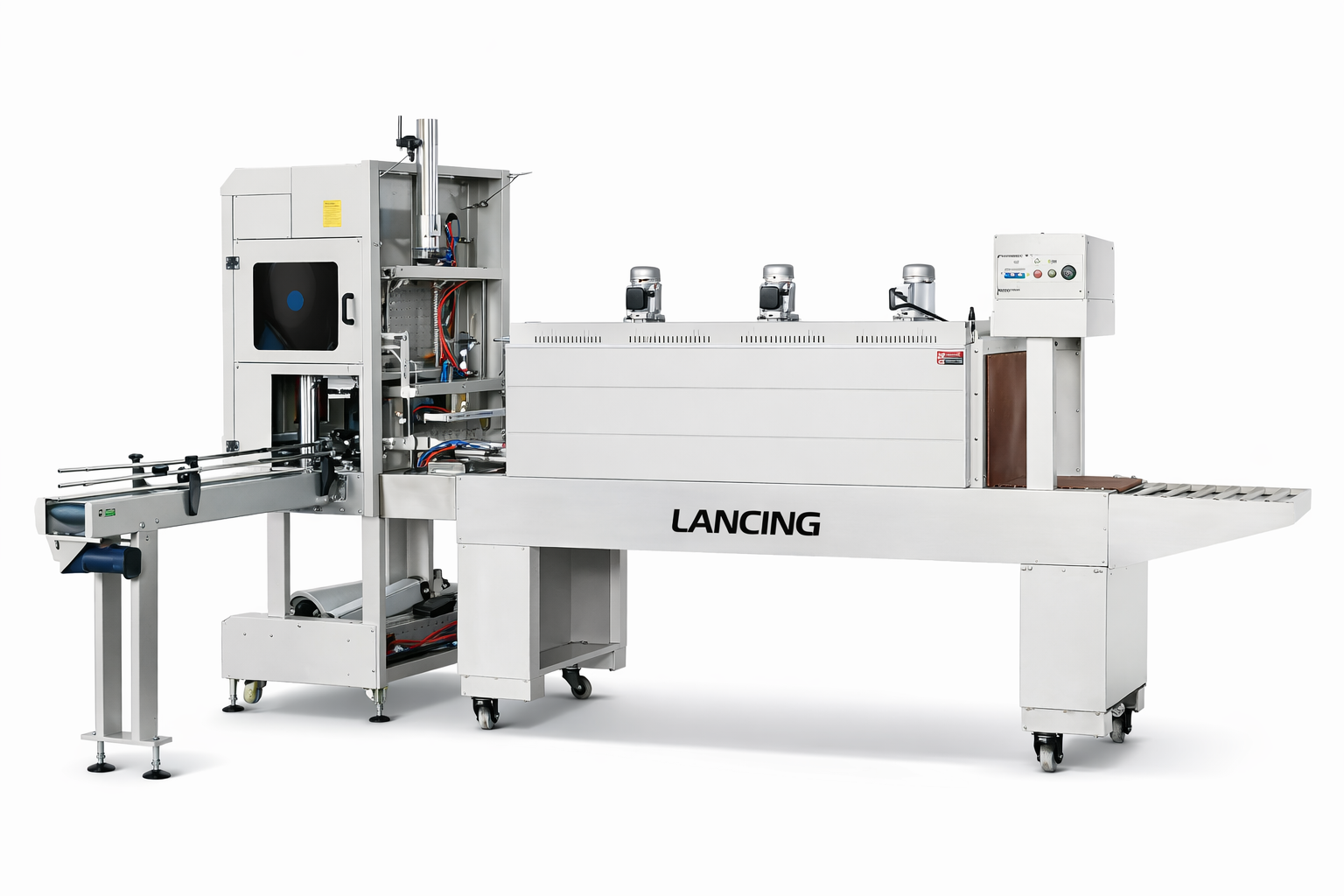
Automatic shrink wrapping machines for production lines

Automatic shrink wrapping machines for UK production lines: compare sleeve sealers, L-sealers, heat tunnels, conveyors and complete shrink wrap systems.

Automatic shrink wrapping machines for production lines

Automatic shrink wrapping machinery is normally selected when hand packing or a chamber sealer cannot keep pace with product flow. The right route depends on product size, pack grouping, film type, infeed stability and the amount of integration needed with upstream and downstream equipment.

When automatic machinery is the better route

Automatic machinery suits repeat products, consistent pack dimensions and output targets where manual sealing creates a bottleneck. Bottle bundles, carton packs, printed matter, trays and retail packs can often be handled through a dedicated sealer and heat tunnel arrangement.

Main machine routes

Use sleeve sealers for multipacks and trayless bundles, L-sealers or side sealers for clear presentation packs, and heat tunnels for controlled shrink after the seal. Sleeve applicators are used when the requirement is label shrinking, neck bands or bottle capsule shrinking rather than outer transit wrapping.

What Lancing needs to quote

Useful details include product dimensions, pack weight, desired finish, film material, packs per minute, infeed height, site power, compressed air availability and the amount of factory footprint available for conveyors and discharge.

Related machinery pages

Frequently asked questions

What is an automatic shrink wrapping machine?

It is a packaging machine route that automatically presents, seals and shrinks film around products using a sealer, tunnel and conveyor handling rather than relying on manual chamber operation.

Which film is used for automatic shrink wrapping?

PE, POF and PVC can be used depending on pack format, finish and production requirement. Lancing can confirm the practical film route around the product and machine configuration.

Can automatic shrink wrapping machines be integrated into an existing line?

Yes. Infeed, spacing, conveyor height, coding, labelling and downstream accumulation can be considered during specification.

Automatic line engineering

Plan automatic shrink wrapping around stable product presentation and line control

Automatic operation can remove repetitive loading and synchronise the shrink stage with a production line, but only when collation, transfers, controls, tunnel recovery and downstream cooling are designed as one duty.

Collation must be repeatable

The machine needs a controlled product count, pitch, orientation and group shape. Unstable bottles, variable cartons or changing infeed pressure can reduce sustainable output even when the wrapper can cycle faster in isolation. Define how the group is formed and what accumulation is available before it.

Interfaces set the line rate

Record upstream discharge behaviour, conveyor heights, direction, sensors, stop/start logic and the response to a downstream blockage. The shrink stage should not create uncontrolled pressure on products or allow a warm pack to enter the next operation before it is stable.

Automatic does not remove changeover

Guides, pack patterns, film width, recipes, sealing positions and inspection limits still require controlled change. Use a changeover sheet and first-off approval so automation repeats the correct setup rather than repeating an error at speed.

Evidence to include

  • Product pitch and orientation at the automatic wrapper infeed.
  • Pack pattern, number of products and whether the group is mechanically stable.
  • Required good packs over time, normal gaps, shift duty and product mix.
  • Production film identity, reel dimensions and expected reel-change method.
  • Upstream/downstream controls, accumulation, cooling distance and fault response.
  • Representative samples for sustained running, restart and changeover checks.

Application review

Define the complete automatic duty

Send the pack matrix, infeed condition, production film, required sustained output, line controls and downstream handling so the automatic route can be assessed as a complete process.

Automatic line boundaries

Confirm pack formation and product support before automating the cycle

Automation repeats the defined process; it does not remove variation in product presentation, film or downstream handling.

Process ownership

Confirm whether the finished pack is a heat-shrunk film envelope or a continuous flow-wrapped pack before choosing the automatic machine family.

Compare the processes

Geometry and presentation

Irregular products need repeatable orientation, clearance, support and agreed defect limits before sensors and guides can be finalised.

Irregular-product guide

Tunnel transfer

Match the conveyor support, actual speed range, tunnel loading and cooling to the automatic infeed and downstream controls.

Tunnel conveyor guide