Sleeve wrap
Automatic sleeve wrapping
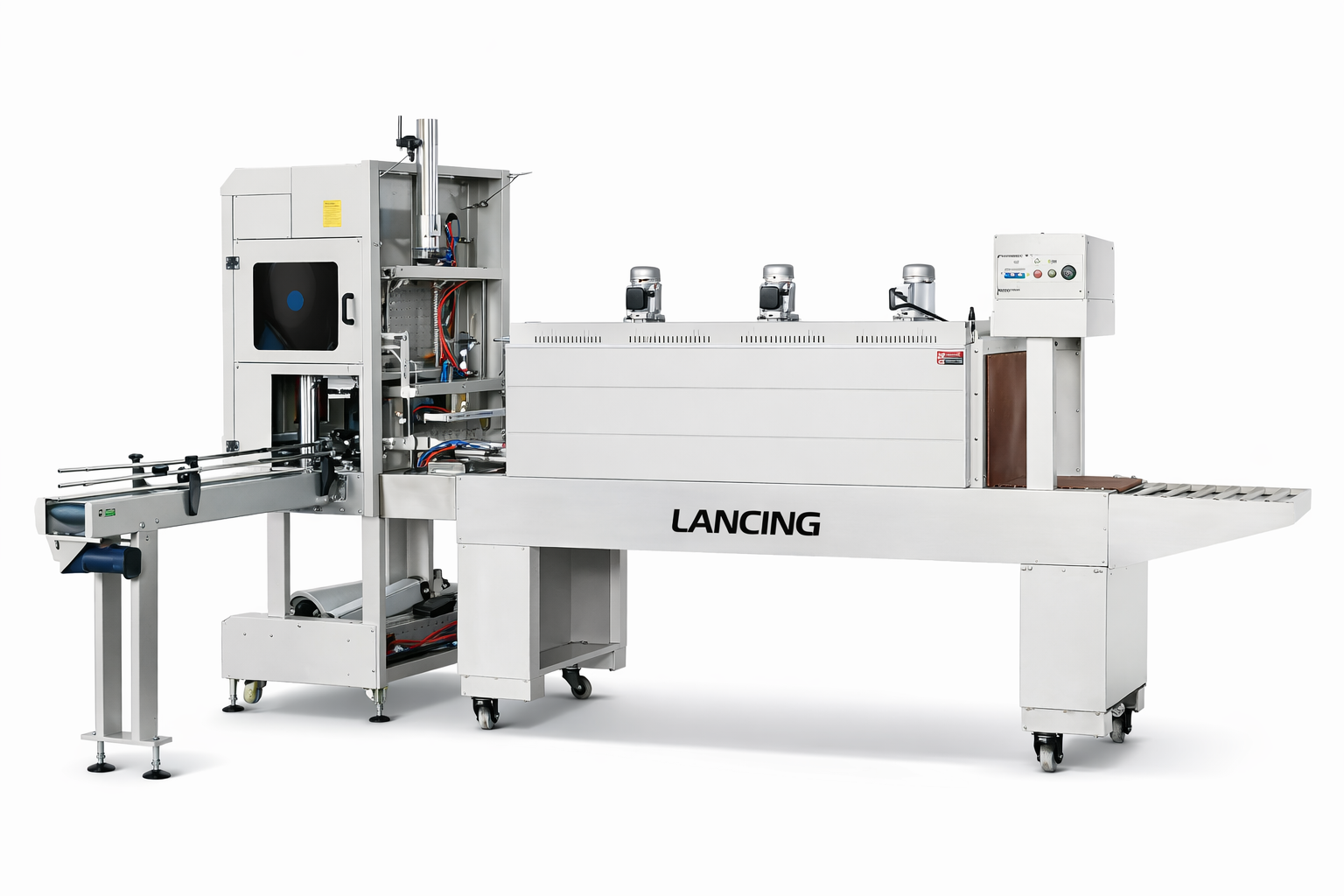
For collated products, bottles, cans, trays and multipacks that need PE film or strong sleeve wrapping.
View related machineryAutomatic production lines
Fully automatic shrink wrapping machinery helps remove manual loading bottlenecks where product flow, pack size and line speed are suitable.
UK specification advice
Automatic shrink wrapping is most effective when products arrive consistently, are stable during transfer and can be collated or spaced before sealing.
The line specification should consider infeed control, product sensors, film tracking, sealing dwell, tunnel length and cooling distance after the tunnel.
For bottles, cans and trays, automatic sleeve sealing with a heat tunnel is often the starting point. For individual presentation packs, side-seal or L-seal routes may be more suitable.
Machinery route
Automation should be designed around the whole pack flow, not only the sealing jaw.
Sleeve wrap
For collated products, bottles, cans, trays and multipacks that need PE film or strong sleeve wrapping.
View related machineryTunnel
Heat tunnels sized for the product, film and required output so the film recovers evenly without overheating the product.
View related machinerySleeve labels
For full body sleeves, neck bands and tamper-evident labels on bottle and container applications.
View related machineryBuying notes
Before specifying a fully automatic shrink wrap line, confirm the real upstream output and how products arrive at the wrapper. A line cannot run reliably if the feed pattern is inconsistent.
Automatic systems often need infeed guides, product spacing, photocells and reject or stop logic. These details should be discussed at quotation stage.
It is also important to consider operator access for film change, jaw cleaning, tunnel temperature checks and routine maintenance.
Common questions
Consistent products with repeatable size, stable transfer and predictable spacing are usually the best candidates.
Yes. Bottle multipacks and tray packs commonly use automatic sleeve wrapping and heat tunnel systems.
No. Speed must be balanced with film recovery, seal quality, transfer stability and operator access.
Provide product size, pack pattern, expected output, film type, layout restrictions and photos or samples if available.
Next step
Send product dimensions, pack format, approximate output rate and film preference. Lancing can help compare chamber sealers, L-sealers, sleeve sealers, heat tunnels and complete shrink wrapping lines.
Fully automatic selection
A fully automatic shrink wrapper should be judged by accepted output through normal starts, gaps, product changes and downstream constraints, not only by a short run of perfectly presented samples.
State how often formats change, which products share guides or film, and which variant creates the largest envelope, highest weight, least stable group or strictest appearance requirement. The line should support those extremes without unsafe or impractical adjustments.
Include controlled upstream starvation, downstream stop, planned gap and restart in the acceptance method. Check that products remain correctly collated, seals remain acceptable and the tunnel returns to its approved thermal load without prolonged waste.
Define what operators or sensors must check and where rejected or suspect packs are handled. Allow sufficient discharge support and cooling before close guides, labelling, accumulation or pallet handling can alter the warm film.
Application review
Provide the production pattern, film, product extremes, interface signals, planned interruptions and finished-pack standard so the line can be scoped and trialled realistically.