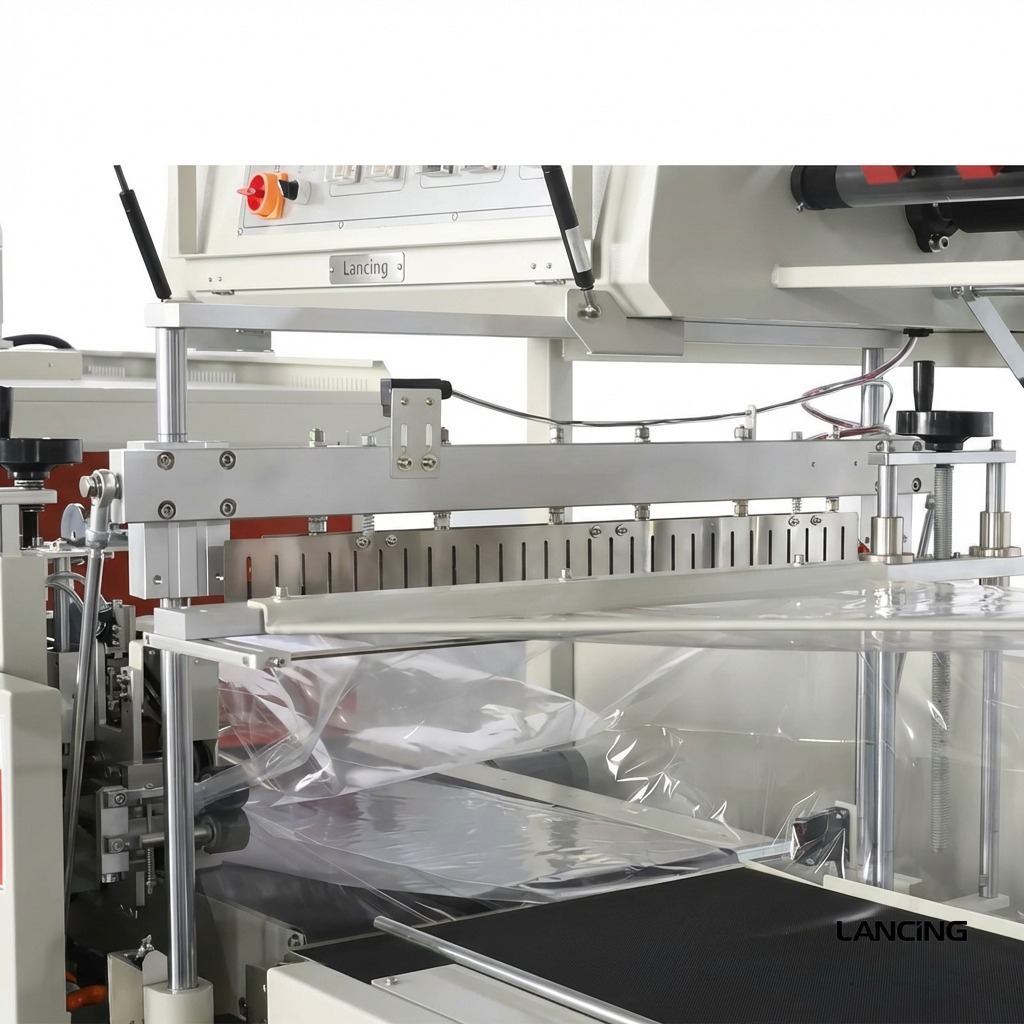
Cartons and retail packs

Shrink wrapping machines for boxes, cartons and retail packs

Shrink wrapping machines for boxes, cartons, books, print, trays and retail packs using L-sealers, side sealers and heat tunnels.

Shrink wrapping machines for boxes, cartons and retail packs

Boxes, cartons, books, printed matter and retail packs usually require a clean seal line, controlled film presentation and a heat tunnel sized around the product dimensions. L-sealers and side sealers are common routes for this type of shrink wrapping.

Why pack dimensions matter

The product length, width and height determine sealing jaw size, tunnel aperture, film width and pack spacing. Tall or heavy products may need slower tunnel speed or a larger conveyor.

L-sealer and side-sealer routes

L-sealers are useful for presentation packs and moderate outputs. Automatic side sealers and heat tunnels suit longer runs, repeat products and higher throughput requirements.

Finish and film choice

Clear POF film is often used where pack appearance is important. PE film may be chosen for heavier or transit-focused applications. The tunnel must be matched to the film route.

Related machinery pages

Frequently asked questions

What shrink wrapping machine is best for boxes?

Many box and carton applications use an L-sealer or side sealer with a separate heat tunnel, selected around product size, film and output.

Can shrink wrap be used for printed matter and books?

Yes. Clear presentation wrapping is a common route for books, printed matter and retail packs where a neat sealed finish is needed.

What details are needed for a carton shrink wrap quote?

Product dimensions, pack weight, desired output, film type, seal finish and available factory footprint are the key starting points.

Boxes and cartons

Protect presentation packs while controlling corners, seals and heat exposure

Boxes and cartons are often shrink wrapped for presentation, grouping or surface protection. The film envelope, sharp corners, print, product heat sensitivity and downstream handling determine whether an L-seal, chamber or another route is appropriate.

Check corners and surface condition

Sharp or abrasive corners can concentrate stress and create holes. Printed or coated surfaces may mark under warm film. Use production cartons and include the least rigid, most heavily printed and sharpest formats in the trial.

Define the acceptable film finish

Agree seal location, corner appearance, permitted dog ears, film tightness and visibility of graphics or barcodes. A transit-protection standard may differ from a retail-presentation standard even on the same carton.

Plan mixed-size changeover

Record guides, film width, seal envelope and recipe by carton family. Frequent small batches may favour flexible operator-assisted equipment; a stable high-volume format may justify automatic presentation and sealing.

Application evidence

  • Smallest/largest carton dimensions, weight and rigidity.
  • Sharp corners, openings, print, coatings and heat-sensitive contents.
  • Production film identity, gauge, fold/width and perforation.
  • Required seal position and accepted presentation standard.
  • Batch size, output, change frequency and loading method.
  • Tunnel, cooling, barcode scanning and downstream packing.

Application review

Send production cartons and the accepted presentation standard

Provide the full size range, contents, print/coating details, film, batch profile and downstream handling so the sealing and tunnel route can be trialled against the real pack.