Retail
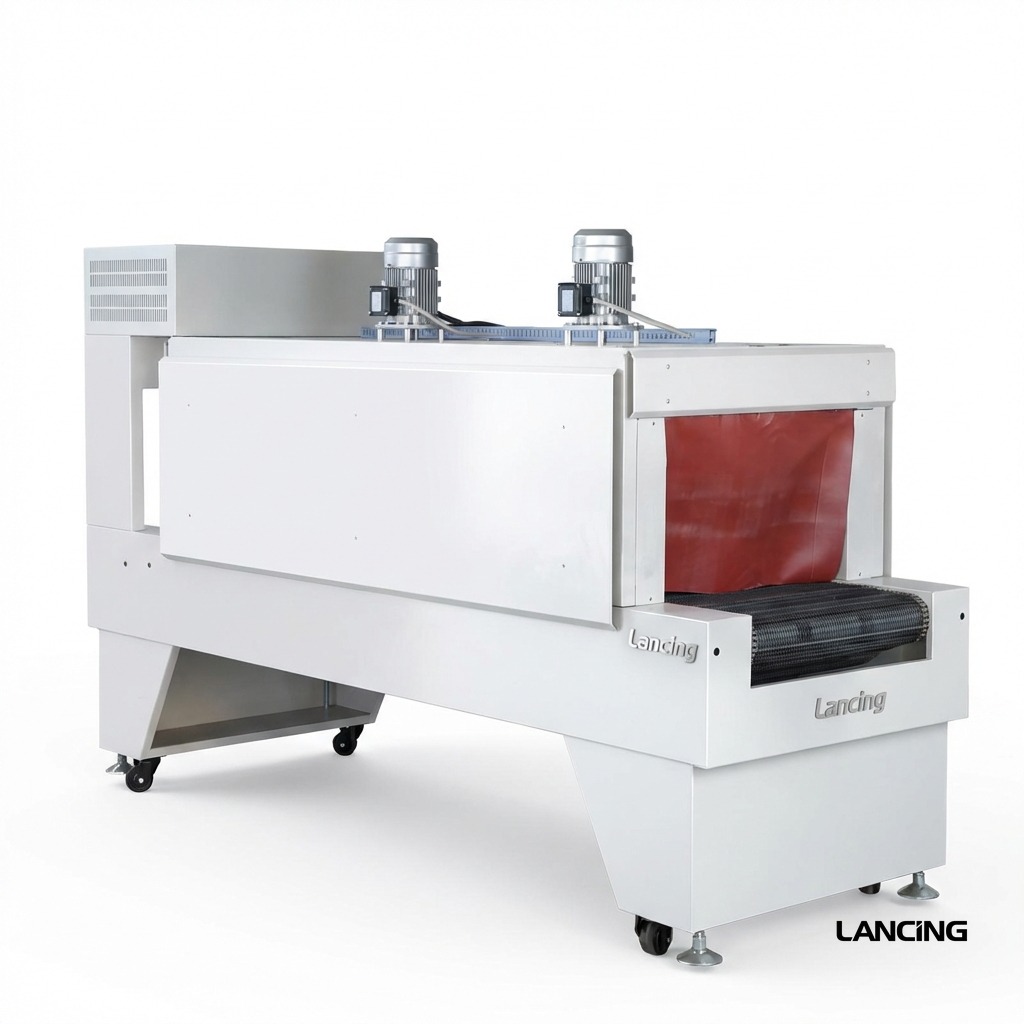
L-sealer and heat tunnel
A common solution for individual boxes and cartons where clean presentation is important.
View related machineryBoxes and cartons
Box and carton shrink wrapping usually needs a clean seal, consistent presentation and film that suits the product finish.
UK specification advice
Boxes, cartons and printed products often use POF film with an L-sealer or side-seal route where the objective is a neat retail or protective wrap.
The chosen sealer must be matched to product length, width and height, while the heat tunnel must be sized to shrink the film without distorting the carton.
For larger transit packs or grouped cartons, sleeve sealing with PE film may be more appropriate than an all-round presentation wrap.
Machinery route
Choose the route based on whether the pack is a single retail box or a transit bundle of cartons.
Retail
A common solution for individual boxes and cartons where clean presentation is important.
View related machineryTunnel
The tunnel should match product size, film type and line speed to avoid poor shrink or heat damage.
View related machineryFilm
POF, PE and PVC routes should be selected around presentation, strength and pack format.
View related machineryBuying notes
For a clean box wrap, the seal position and film overlap should be planned before choosing the machine size. Too much film can create bulky corners; too little can create weak seals.
Cartons vary in heat tolerance, especially when labels, glues or coatings are present. Tunnel settings and dwell time should be considered with sample packs where possible.
If the requirement includes both individual cartons and bundles, it may be necessary to compare L-sealing and sleeve sealing routes.
Common questions
For individual boxes, an L-sealer with a heat tunnel is commonly used. For grouped cartons, a sleeve sealer may be more suitable.
Yes, but the film and tunnel settings should be checked so the finish remains clean and the carton is not overheated.
POF film is common for presentation packs, while PE may be used for heavier bundles.
Most continuous L-sealer and sleeve sealer routes use a separate heat tunnel after sealing.
Next step
Send product dimensions, pack format, approximate output rate and film preference. Lancing can help compare chamber sealers, L-sealers, sleeve sealers, heat tunnels and complete shrink wrapping lines.
Box application detail
A useful box shrink-wrapping brief records the real carton construction, dimensions, contents, film, finish and batch pattern. These details determine sealing, tunnel exposure and whether operator-assisted or automatic handling is practical.
Include bulged, lightly filled or variable cartons as well as nominal dimensions. Open flaps, windows, projecting features and uneven surfaces can change film presentation and seal clearance.
Provide the intended reel and define tightness, clarity, seam location, corner appearance and any barcode or printed area that must remain visible. Use annotated photographs or an approved sample where presentation matters.
Stable repeat products can support automatic feeding and sealing. Mixed batches may need flexible loading and quick film changes. Compare the complete accepted cycle rather than applying the same automation level to every SKU.
Application review
Provide samples, production film, batch pattern, required output and downstream handling so the box-wrapping route can be scoped around actual tolerances and presentation needs.