Bundles
Sleeve sealer
Best for multipacks, trays, cans, bottles and transit bundles where a strong sleeve wrap is needed.
View related machineryComparison guide
Sleeve sealers and L-sealers are both shrink wrapping machines, but they are usually chosen for different pack formats.
UK specification advice
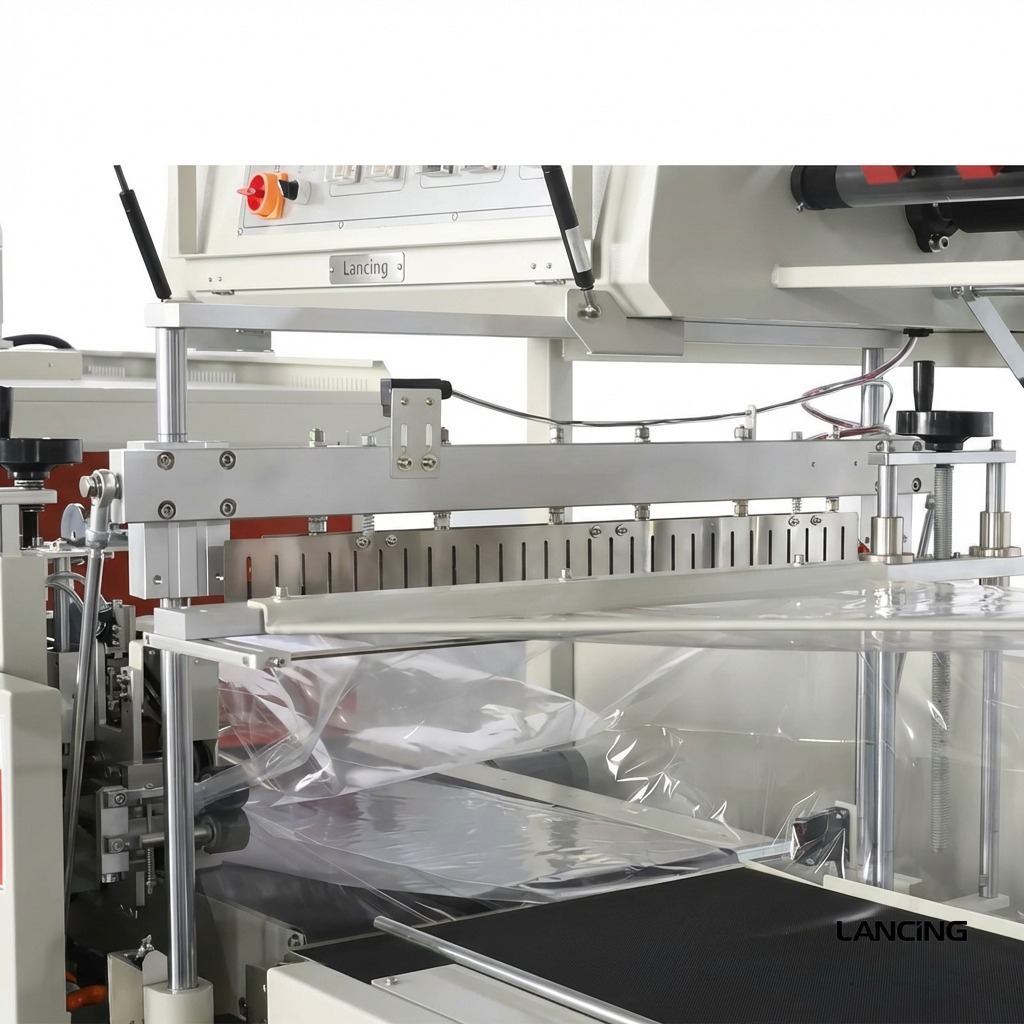
A sleeve sealer creates a film sleeve around a product or bundle, often leaving open sides. It is commonly used for multipacks, trays and transit packs.
An L-sealer creates a two-sided seal around a product, usually for a cleaner all-round presentation wrap before the pack enters a shrink tunnel.
If the pack is a bundle of bottles, cans or trays, compare sleeve sealers first. If it is a boxed retail product or individual item, compare L-sealers and chamber sealers.
Machinery route
The terms are sometimes used together, but the applications are different.
Bundles
Best for multipacks, trays, cans, bottles and transit bundles where a strong sleeve wrap is needed.
View related machineryPresentation
Best for individual packs, boxes and retail presentation where a clean perimeter seal is important.
View related machineryShared
Both routes usually need a heat tunnel sized for the product and film.
View related machineryBuying notes
Start by deciding whether the finished pack can have open sides. If yes, sleeve sealing may be suitable. If the pack needs a fully enclosed presentation finish, an L-sealer is usually closer.
Next consider film type. PE sleeve wrapping is common for bundles, while POF film is common for L-sealed presentation packs.
Finally check operator handling and output. High product variation can favour more flexible semi-automatic systems, while repeatable products may justify automatic feeding.
Common questions
No. They seal film in different ways and are usually used for different pack formats.
Bottle bundles usually use sleeve sealing. Individual bottle sleeves or labels need sleeve applicator machinery.
For individual boxes, an L-sealer and heat tunnel are commonly considered first.
Most continuous sleeve sealer and L-sealer routes use a heat tunnel after sealing.
Next step
Send product dimensions, pack format, approximate output rate and film preference. Lancing can help compare chamber sealers, L-sealers, sleeve sealers, heat tunnels and complete shrink wrapping lines.
Technology comparison
L-sealers and sleeve sealers create different film envelopes. Defining the finished pack, product grouping and handling requirement makes the route clear before individual models are compared.
L-sealers commonly form a film envelope around an individual product, box or retail pack before tunnel shrinking. Seal location, clear presentation, corners and film air release are key acceptance points.
Sleeve sealers commonly wrap a stronger film sleeve around bottles, cans, cartons or trays. Group stability, complete weight, side openings, tunnel loading and cooling are central to bundle performance.
POF, PE and PVC-related materials have different constructions and applications. Select the finished-pack architecture first, then confirm the exact production film and machine configuration with trials.
| Question | L-sealer route | Sleeve-sealer route |
|---|---|---|
| Finished-pack shape | Substantially enclosed presentation film around a product or pack | Open-sided sleeve around a grouped or supported bundle |
| Common product form | Boxes, books, printed matter, trays and individual retail goods | Bottles, cans, cartons, trays and transit multipacks |
| Film presentation | Loose film envelope formed and sealed around the product | Film sleeve formed across the front and back of the group |
| Critical precondition | Product fits seal envelope and can be presented consistently | Group is stable and supported before shrinking |
| Tunnel focus | Corner finish, air release, clarity and product heat response | Bundle tightening, side opening, thermal load and cooling support |
| Trial evidence | Seal position, corners, surface condition and presentation | Seal strength, group shape, pack handling and side opening |
Application review
Provide the pack pattern, complete weight, film, accepted appearance, output duty and downstream handling so the correct sealing architecture can be shortlisted.