Compact
Chamber sealer
Compact sealing and shrinking in one machine for smaller products and lower volume work.
View related machineryComparison guide
A chamber sealer is compact and simple for lower volume work, while an L-sealer and tunnel route can suit larger packs and higher throughput.
UK specification advice
A chamber sealer combines sealing and shrinking in one hood-style chamber. It is space efficient and useful for lower volume packing rooms.
An L-sealer normally works with a separate heat tunnel, making it a better route for higher output or larger products where continuous transfer is needed.
The choice depends on pack size, daily volume, operator workflow and whether the packing room has space for a tunnel line.
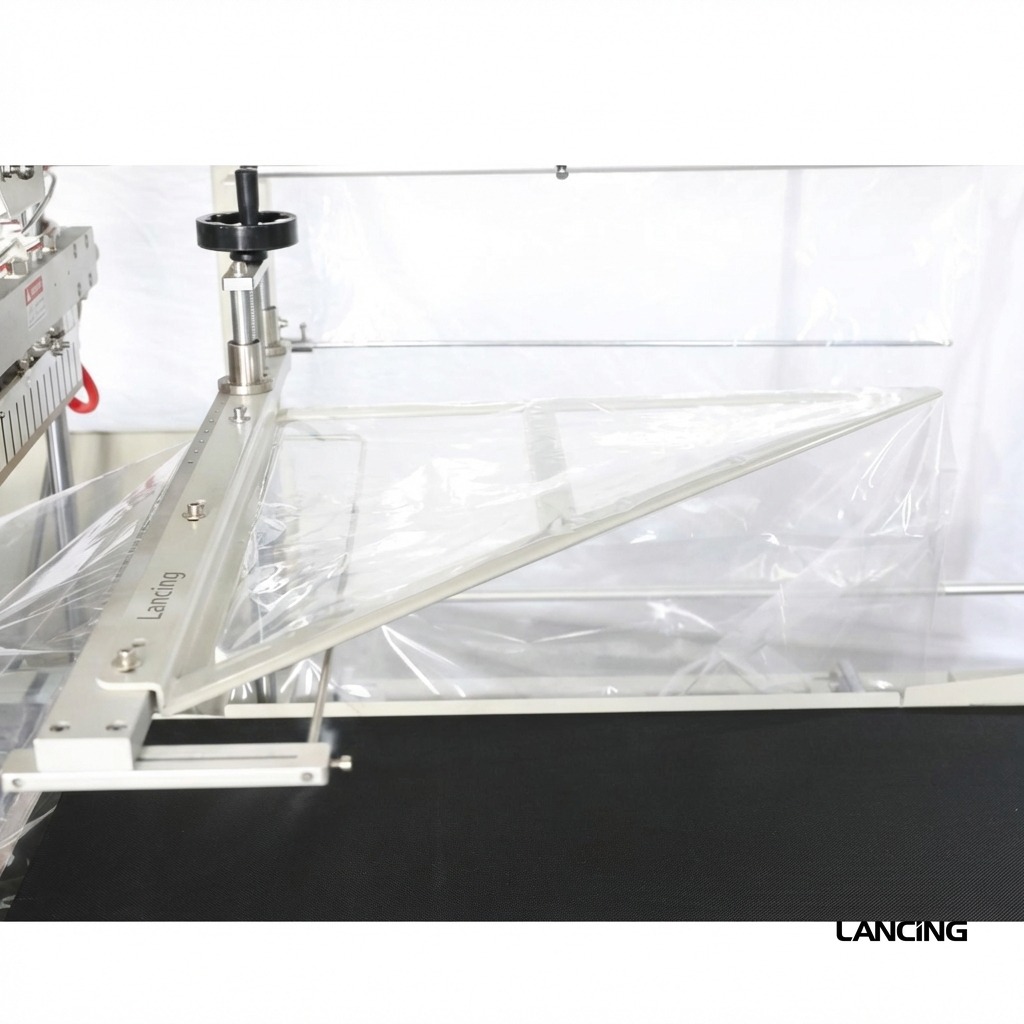
Machinery route
Small footprint and simplicity point to chamber sealers; larger output points to L-sealer and tunnel lines.
Compact
Compact sealing and shrinking in one machine for smaller products and lower volume work.
View related machineryLine
Separate sealing and heat shrinking for higher throughput and larger product ranges.
View related machineryBuying notes
Choose a chamber sealer when simplicity, footprint and lower volume are more important than continuous line speed.
Choose an L-sealer and tunnel route when the product range is larger, the output requirement is higher or you need a more continuous process.
If you are unsure, send the largest product size and the expected daily volume so the options can be compared properly.
Common questions
It can be a good option for lower volume packing where a compact machine is needed.
Usually yes, because it is normally paired with a separate heat tunnel and conveyors.
Both can produce neat packs when correctly specified. The right choice depends on pack size, film and output.
They are limited by chamber size. Larger products often need an L-sealer and tunnel route.
Next step
Send product dimensions, pack format, approximate output rate and film preference. Lancing can help compare chamber sealers, L-sealers, sleeve sealers, heat tunnels and complete shrink wrapping lines.
Technology comparison
The best route depends on product envelope, batch pattern, production film, operator method, space and the required finished pack. A like-for-like trial avoids choosing by machinery name alone.
A chamber machine combines sealing and shrinking in one enclosed cycle. It can reduce floor-space and transfer complexity for lower-volume mixed work, but the wrapped product must fit the usable chamber and seal envelope and the operator cycle must be safe and repeatable.
An L-sealer forms the film pack before a separate heat tunnel. This can support a continuous flow and independent control of sealing and shrinking, but it requires suitable transfers, tunnel space and a controlled film envelope.
Use the same products, production film, batch or line duty and finished-pack standard for both routes. Include loading, film handling, changeover, cooling, inspection and operator work rather than comparing isolated machine cycle times.
| Decision factor | Chamber route | L-sealer and tunnel route |
|---|---|---|
| Process arrangement | Seal and shrink within one enclosed machine cycle | Separate film sealing followed by conveyor tunnel shrinking |
| Typical project priority | Compact flexible batch operation | Continuous presentation-wrap process with separate tunnel control |
| Product envelope check | Loaded chamber/hood clearance plus seal position | Loose-film seal envelope, transfers and tunnel aperture |
| Operator input | Load, present film, start cycle and unload | Manual or automatic presentation depending on machine; transfer through tunnel |
| Changeover focus | Film preparation, chamber clearance, seal position and recipe | Guides, film width, seal envelope, tunnel recipe and transfers |
| Acceptance focus | Complete operator cycle, pack finish and product heat response | Seal integrity, tunnel process window, cooling and sustained line handling |
Application review
Send the product range, film, batch profile, space, operator method and approved pack so Lancing can compare chamber and L-sealer options on a common basis.