Sleeve labels

Shrink sleeve applicators for bottle labels and tamper bands

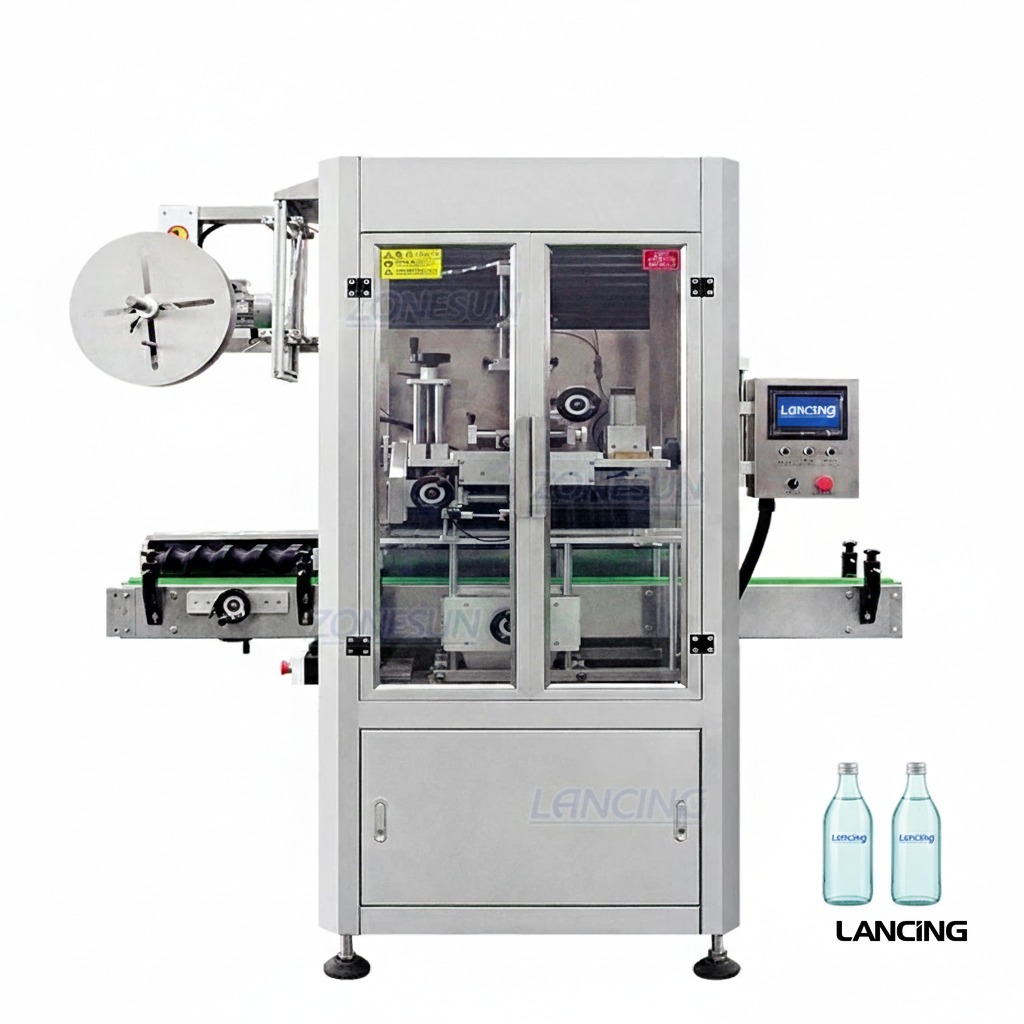
Shrink sleeve applicators for bottle labels, neck bands, tamper-evident sleeves and capsule shrinking on beverage, cosmetic and pharmaceutical containers.

Shrink sleeve applicators for bottle labels and tamper bands

Shrink sleeve applicators handle label or band placement before controlled heat shrinking. They are used for bottle decoration, tamper evidence, capsule shrinking and partial or full-body container sleeve applications.

Sleeve applicator route

A sleeve applicator feeds, cuts and applies sleeve material to the container. The sleeve is then passed through a steam or electric heat shrink stage according to material and pack requirements.

Neck bands and capsules

Bottleneck sleeves and capsules require accurate height control and heat shrinking around the neck profile. This is different from outer film bundle wrapping.

Container details to confirm

Diameter, height, shape, material, line speed, sleeve length, label thickness and existing conveyor arrangement should be supplied before selecting a machine.

Related machinery pages

Frequently asked questions

What does a shrink sleeve applicator do?

It applies sleeve material to a bottle or container before the sleeve is shrunk into position by a heat or steam tunnel.

Are shrink sleeves suitable for tamper evidence?

Yes. Neck bands and full-body sleeves can be used for tamper-evident packaging where the application is correctly specified.

What bottle shapes can be sleeved?

Round, square and oval containers can often be handled, but diameter range, height and sleeve control need to be confirmed.

Bottle sleeve labels

Specify bottle sleeve application from the final decorated container

Bottle sleeve projects need a controlled relationship between container dimensions, sleeve layflat and cut length, application position, shrinking and final print appearance.

Include every container profile

Shoulders, tapers, ribs, handles and varying closure diameters change how a sleeve opens, drops and shrinks. Supply the full range and identify which profile is most difficult, not only the highest-volume bottle.

Define print-critical zones

Mark logos, text, barcodes, seam position and areas where distortion is unacceptable. The sleeve artwork should be assessed on the container after shrinking and cooling, using the production material and print.

Control changeover references

Retain container code, sleeve code, guide positions, recipe and approved sample. A change in container supplier or sleeve construction should trigger first-off confirmation before normal output resumes.

Application evidence

  • Container dimensions, drawings or measured samples and full profile range.
  • Closure type and any heat-sensitive liner or decoration.
  • Sleeve material, layflat, cut length, thickness, seam and print.
  • Pre-heat placement and final graphic position.
  • Required output, product pitch, orientation and changeover frequency.
  • Inspection, cooling and downstream labelling or packing.

Application review

Send the complete bottle and printed-sleeve range

Provide production samples, artwork-critical zones, accepted final position, line pitch and output duty so the application and shrinking route can be checked across every profile.