Multipacks
Sleeve sealer with heat tunnel
Often used for bottles, cans, trays and multipacks where the pack needs a strong transit wrap rather than a fully enclosed presentation pack.
View related machineryIndustrial shrink packaging
A practical guide to selecting industrial shrink wrapping machinery for production lines, warehouses and contract packing operations.
UK specification advice
Industrial shrink wrapping projects usually need more than a headline machine speed. Product length, height, pack stability, film thickness, tunnel aperture and conveyor transfer all affect the finished result.
Lancing can help match the route to the job, whether the requirement is a neat retail wrap, a transit bundle, a bottle multipack, a sleeve label or a compact chamber sealer setup for lower output.
Use this page to narrow the choice between sleeve sealing, L-sealing, heat tunnel and sleeve applicator machinery before sending pack dimensions for a quote.
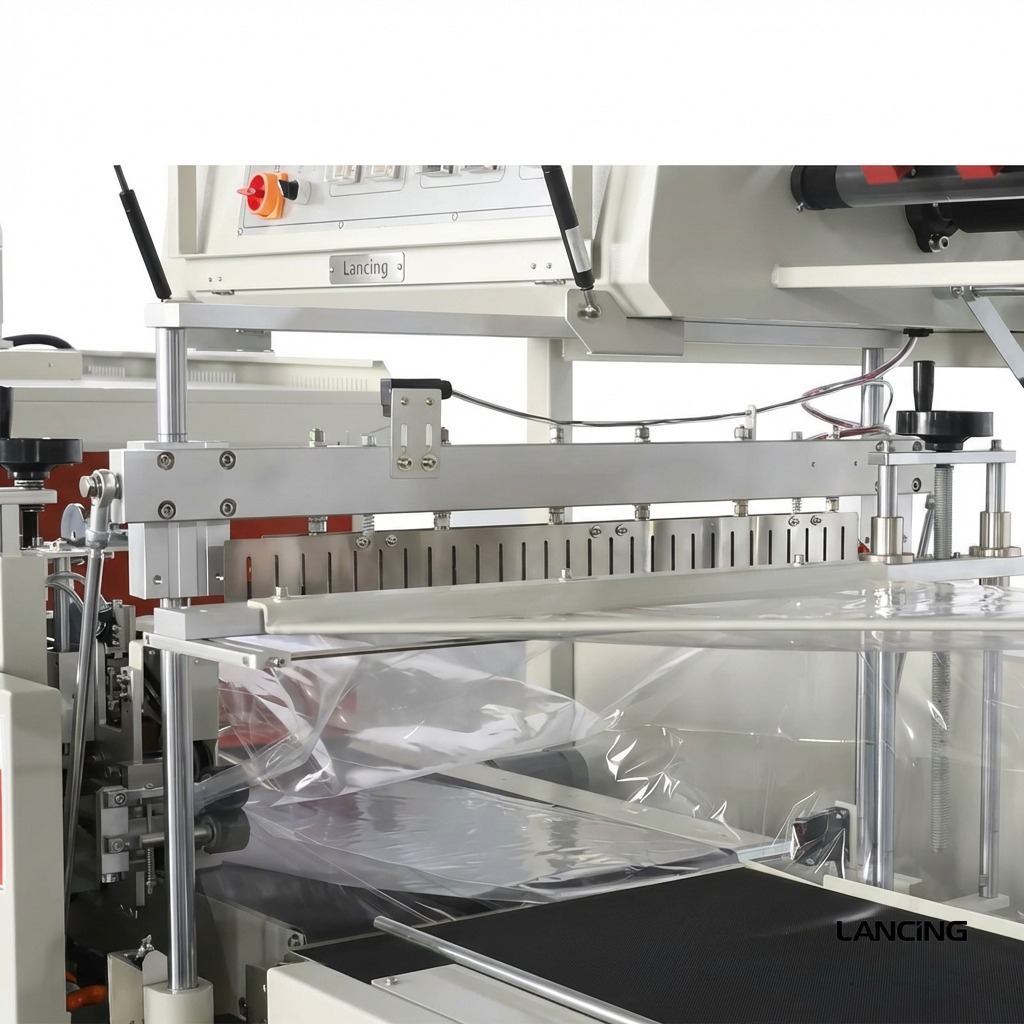
Machinery route
The best machine route depends on whether the wrap is for presentation, collation, transit protection or shrink sleeve application.
Multipacks
Often used for bottles, cans, trays and multipacks where the pack needs a strong transit wrap rather than a fully enclosed presentation pack.
View related machineryRetail packs
A good route for boxed products, printed matter, retail packs and single items where a clean all-round seal is important.
View related machineryHigher output
Used where manual loading is slowing production and the product can feed consistently into a sealing and heat shrinking process.
View related machineryBuying notes
A reliable specification should confirm the maximum pack size, film width, seal area and tunnel aperture, not just the model name. The most common mistake is choosing machinery before confirming the actual product range.
For industrial use, the infeed and outfeed are as important as the sealer. Bottles, cans and cartons may need guide rails, side pushers, product collation or transfer support before the sealing section.
Where the product range changes regularly, it is usually better to choose a machine with easier adjustment and a little spare capacity rather than a machine that only fits the current pack.
Common questions
For multipacks and transit wrapping, a sleeve sealer and heat tunnel is usually considered first. For presentation packs, an L-sealer or side-seal machine may be more suitable.
Many shrink wrapping machines can be adjusted, but the practical range depends on product height, length, film width and the tunnel aperture.
Send product dimensions, pack format, target output, film preference and available floor space. Photos or short videos of the product can also help.
Most sleeve sealing and L-sealing routes use a heat tunnel after the seal. Chamber sealers combine sealing and shrinking in one compact machine.
Next step
Send product dimensions, pack format, approximate output rate and film preference. Lancing can help compare chamber sealers, L-sealers, sleeve sealers, heat tunnels and complete shrink wrapping lines.
Industrial application
Industrial packs can place greater demands on conveyor support, group stability, film strength, tunnel thermal load, cooling and downstream handling. Those conditions should be defined before selecting a nominal machine size.
Record how the complete pack weight is supported from infeed through sealing, tunnel and discharge. Heavy or uneven products may need specific conveyor construction and transfers; the published maximum for a named machine only applies within its stated configuration.
Film cannot reliably correct an unstable or poorly collated group. Define guides, trays, pads, supports or spacing needed to preserve the pack pattern while the film is sealed and during the initial tunnel exposure.
Dense products can create high thermal load and warm film may remain vulnerable after the tunnel. Include cooling distance, discharge support, accumulation and pallet or case handling in the layout.
Application review
Send the heaviest and least stable pack, film data, sustained duty, conveyor interfaces and downstream handling so the machinery can be checked against the full load path.